
When I ask about changeover time in a plant, I almost always get a number from the system. It describes the time between the last good part of the old order and the first good part of the new one. What it does not describe is what actually happens during that time. And that is exactly where the problem lies.
Because anyone who watches a changeover rarely sees a setter concentrating on loosening bolts. You see someone searching, waiting, asking, walking. The tool is not preset. The drawing is in the office. The forklift with the material is still at goods-in. The crane is being used at the neighbouring machine. The machine is stopped, but no changeover is happening.
In this article I will show you why the biggest changeover losses occur before the first move, how you can make those losses visible, and why the solution usually does not lie at the machine but in the organisation around it.
What changeover time really is, and what only goes by that name
In a plant, changeover time is an umbrella term. It covers everything that passes between two orders on a machine: changing the tool, loading the program, setting parameters, checking the first part, releasing it. But there is a second, mostly invisible block on top of that: obtaining everything needed for those steps.
The SMED method draws the line exactly here. It distinguishes internal changeover activities, which are only possible while the machine is stopped, from external ones, which can be done while the machine is running. Fetching the tool from the store, printing the drawing, staging the material, checking the measuring equipment: all of that is external. It does not belong in the downtime.
In practice it happens during the downtime anyway. Not out of laziness, but because nobody has ever looked at the changeover as a process. The setter starts when the machine is free and then fetches whatever is missing. So the changeover time in the system reflects the organisation behind it more than the changeover work itself.
Looking at what happens before the first move
During a changeover, I do not ask to be shown the machine. I ask to be shown the hour before it. When did the setter know which order was next? How did he know: from the board, from the supervisor, from someone calling across the hall? Was the tool ready or did he have to fetch it? Was it preset? Was the material already at the machine?
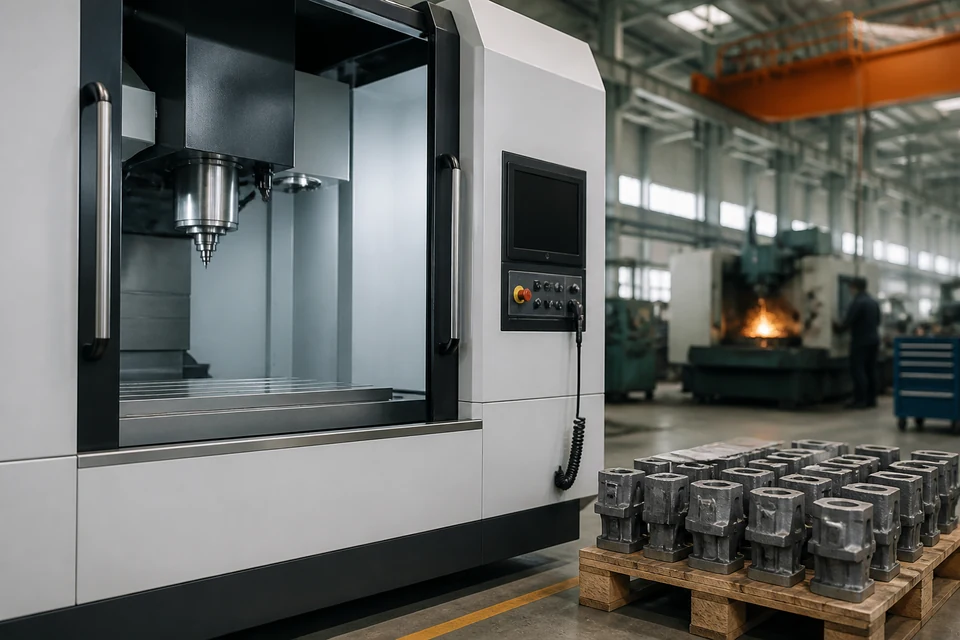
A plant with several machining centres that I supported had long changeover times and blamed them on the old machines. Watching told a different story: the setter only learnt about the next order once the current one was finished. Then he went to the tool store, looked for the holders, discovered that one unit was mounted on another machine, sorted that out with a colleague, came back and began. The actual change was short. The gathering was long.
You will find patterns like this everywhere once you look for them: - The changeover sequence is only fixed in the morning, which makes preparation impossible. - Tools are shared without anyone knowing where they currently are. - Presetting devices exist but are not used because there is no time for them. - The first-part inspection waits for quality assurance, who are on another line at the time. - The crane or forklift is a resource that nobody plans for.
None of these problems has anything to do with the machine. All of them can be solved without investment.
Make the changeover visible before you improve it
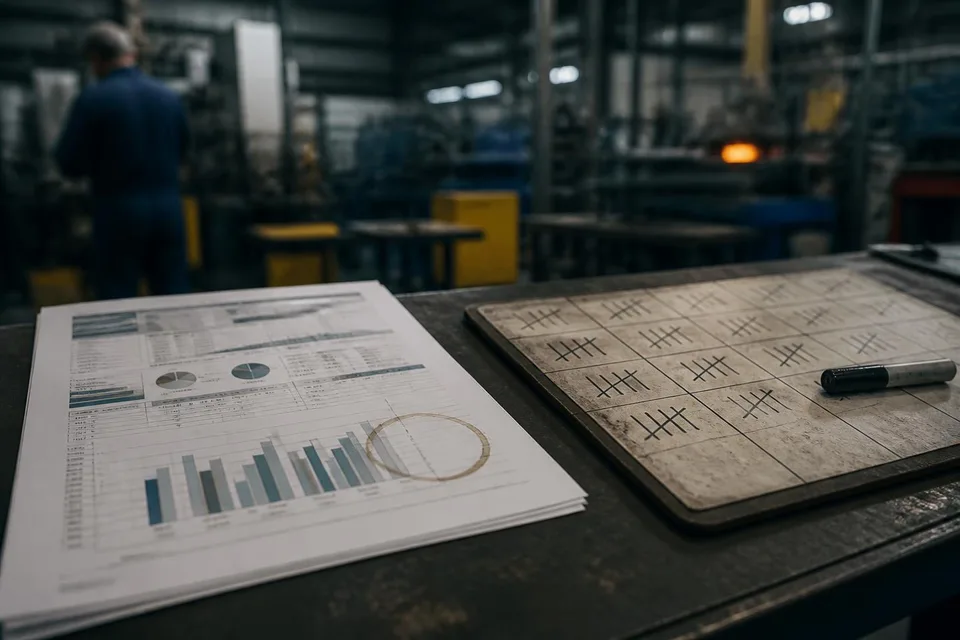
The most effective first step is a changeover log with a stopwatch, ideally with video. Not to check up on anyone, but to see together what is happening. I always do this together with the setter, and I have yet to meet one who was not surprised himself at how much time he spends searching and walking.
Every step gets a line: what was done, how long it took, whether the machine was stopped at the time, whether it could have been done beforehand. At the end you sort the lines into internal and external. Usually the external share is far larger than anyone expected.
The attitude matters here. If the setter feels that his performance is being judged, you get a polished changeover and no insight. If he realises that this is about his working conditions, he becomes your most important team member. He has known for a long time where things get stuck. He was simply never asked.
The three levers before the machine
From many changeover workshops, three levers have crystallised for me that take effect before the first move.
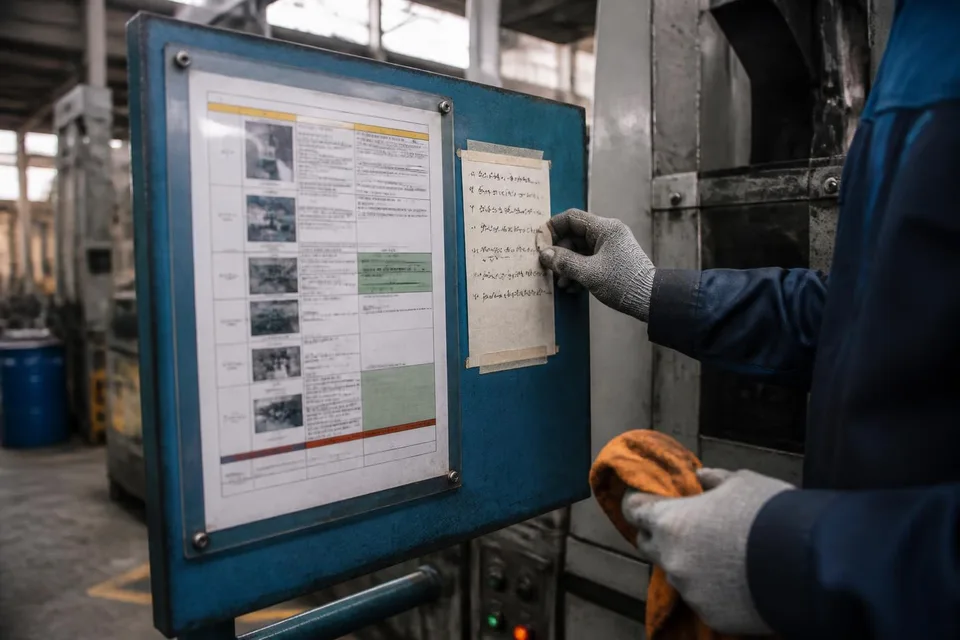
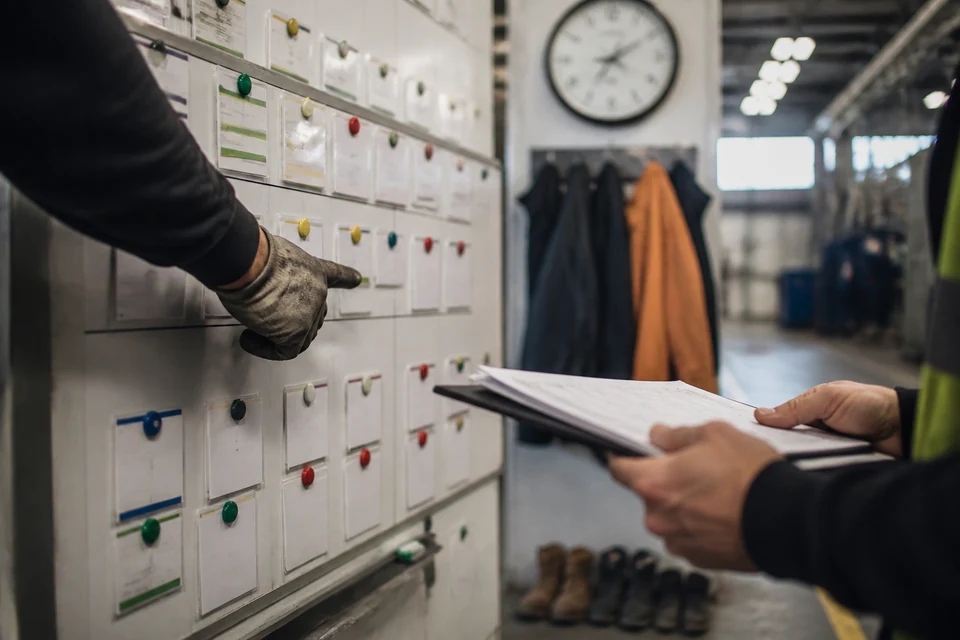
First: know the sequence early. Anyone who knows the next order a shift in advance can prepare. That requires production planning and scheduling to keep the sequence stable and make it visible, for example on the shopfloor board. Short-notice rescheduling remains possible, but it becomes the exception that stands out.
Second: changeover trolley and changeover kit. Everything needed for a change is laid out ready on a trolley: tools preset, clamping devices, drawing, inspection equipment, program ready. The setter no longer goes to fetch things, he takes them. Who prepares the trolley is an organisational question: a second person, the setter himself while the machine is running, or the tool store.
Third: a standard for the sequence. A simple changeover standard, developed with the team, records what happens in which order and what must be done beforehand. It is not a directive from above but the best known method, which anyone is allowed to improve. Without a standard, every improvement slips back after a few weeks.
Why the office plays a part in changeovers
Changeover is seen as a production topic. In reality it starts in order processing. If orders are only released shortly before machining, if drawing changes are not attached to the order, if scheduling changes daily because a customer phoned, then the setter has no chance to prepare.
That is why, in changeover projects, I always look at production planning and scheduling too. That is where it is decided whether the shop floor knows a day in advance what is coming, or only in the morning. A stable planning horizon, even a short one, is worth more than any optimisation of the clamping fixture.
The same applies to quality assurance. If the first-part release depends on one person who is needed elsewhere at that moment, the machine stands still. The solution is often to delegate the release for defined parts to the setter, with clear inspection criteria. That is a leadership decision, not a technical one.
What leadership has to contribute
Changeover projects rarely fail because of the method. They fail because the preparation belongs to nobody. The setter is supposed to prepare but has other tasks while the machine is running. The tool store is supposed to preset but has no capacity. Scheduling is supposed to keep the sequence stable but has sales breathing down its neck.
This is where plant or production management is needed. They have to decide who does the external changeover work and keep that time free in the daily routine. They have to protect the schedule when sales wants to reshuffle it. And they have to track changeover time with a KPI that is discussed in the shopfloor meeting, not in the monthly report.
If that succeeds, changeovers do not just get shorter. They become predictable. And predictable changeover times are the prerequisite for running smaller batches, reducing stock and meeting delivery dates. That is the real reason the topic is worth it: not the minutes at the machine, but the flow through the plant.
In short
- The changeover time in the system measures downtime, not changeover work. The largest share is often searching, waiting and walking.
- SMED separates internal and external changeover steps. Everything that can be done while the machine is running belongs outside the downtime.
- A changeover log recorded together with the setter shows the losses honestly and makes him a team member rather than someone being watched.
- An early sequence, a changeover trolley and a shared standard take effect before the first move and cost no investment.
- Stable scheduling and delegated first-part release are leadership decisions that reduce changeover time more than any technology.
Frequently asked questions
Frequently asked questions
What is the difference between internal and external changeover?
Internal changeover covers all the steps that are only possible while the machine is stopped, such as changing the tool or setting the parameters. External changeover covers everything that can also be done while the machine is running: fetching and presetting tools, staging material, preparing drawings and programs. The SMED method aims to move as much as possible from internal to external and to simplify the remaining internal steps.
Do I need new machines or clamping devices for shorter changeover times?
In most cases not as a first step. The biggest losses arise in the organisation around the change: unclear sequence, missing preparation, shared tools, releases that keep people waiting. These losses can be eliminated with standards, changeover trolleys and stable scheduling. Only once the organisational share is clean is it worth looking at quick-clamping systems or presetting devices.
How do I involve the setters without making them feel monitored?
By recording the changeover log together with them and making clear from the outset that it is about their working conditions, not their performance. The setters know the disruptions best and usually have had ideas for a long time about how things could be better. If their suggestions are visibly implemented, they support the standard. If the standard comes from above, it gets bypassed.