01
The lean programme was launched on a grand scale; little of it is left in day-to-day work. Standards exist on paper, not at the line.
lean management
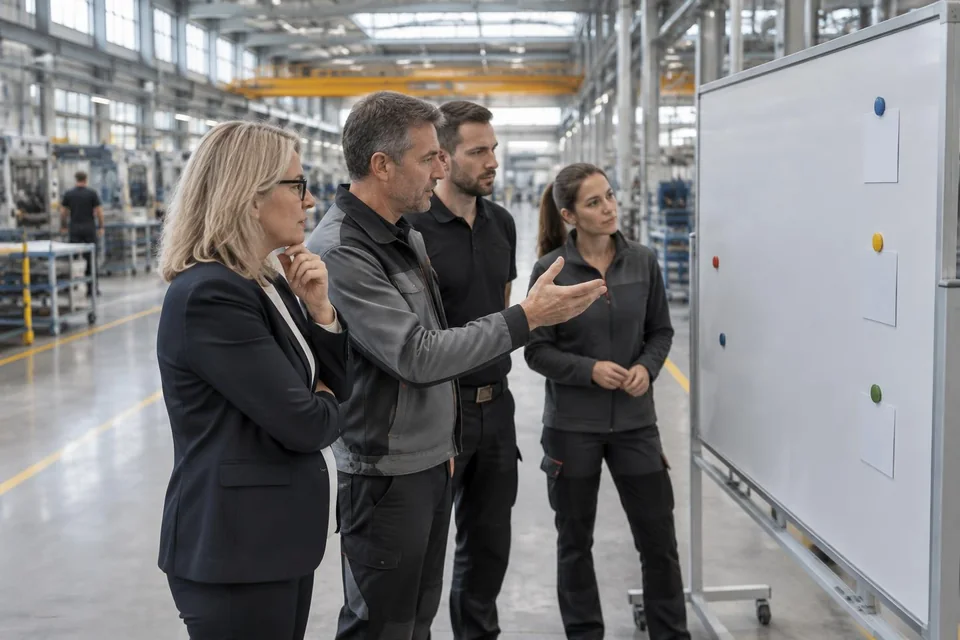
For me, lean management does not mean forcing a package of methods onto your plant. It means finding waste where it arises and building, together with the people on site, processes that still work after the project has ended. I support manufacturing companies in Switzerland, Germany and Austria in doing exactly that, on the shop floor and in the office.
Most of the enquiries that reach me do not start from zero.
Lean means measuring every step by whether it creates value for the customer. Everything else is waste: waiting, transport, inventories, unnecessary movement, overproduction, rework and processes that are more complicated than they need to be. The principles of lean management have been known for decades: define value, identify the value stream, create flow, pull instead of push, and run the whole thing as a continuous improvement process.
You probably know the lean management methods that follow from this: 5S, value stream mapping, shop floor management, Kanban, SMED, TPM, A3 problem solving, Kaizen. What matters is not how many of them have been introduced, but whether the right method sits at the right bottleneck and whether the people who work with it every day understand it and want it.
Lean production and lean manufacturing refer to the application in manufacturing. Lean Administration, often called Lean Office, transfers the same logic to office processes, where idle times and interfaces determine lead time. I hold certifications for both worlds and I work in both.
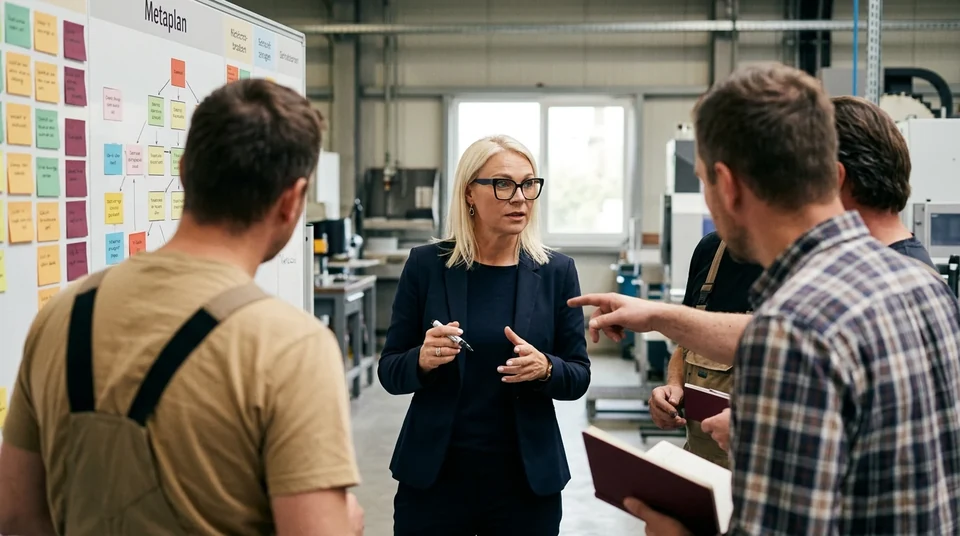

I never start with a method, but with a measurement. My Lean and Change Maturity Check looks at seven assessment areas, from governance through lean and process management to measurability and IT, separately for shop floor and office.
I go to the line, into order processing, to the interfaces. Value stream mapping, waste audit, conversations with shift leaders and clerical staff.
Not ten construction sites, but the ones that actually move lead time, quality or delivery reliability.
Reports, committees and methods that nobody needs any more go onto a stop list.
Kaizen workshops, standards developed with the operators, shop floor boards built with the teams, not for them.
Key figures, regular communication routines and audits until the new processes have become second nature.
At the end there is no concept paper, but a change you can see at the line.
Maturity profile across seven assessment areas, for shop floor and office each, with prioritised fields of action.
Value stream map of your core process with lead time, process time and identified bottlenecks.
Stop list: methods, reports and committees you can discontinue.
Roadmap with two or three value drivers, owners, key figures and quick wins.
Standards, shop floor boards and regular communication routines, developed together with the teams.
On request: training of internal lean champions so that the knowledge stays in-house.
Intro call
You describe your starting point, I tell you openly whether and how I can help.

Frequently asked questions
Lean management is a leadership and organisational approach that measures every activity by whether it creates value for the customer. Whatever creates no value counts as waste and is reduced or eliminated. Originally developed from the Toyota Production System, lean is now applied in manufacturing, administration, logistics and services. At its core are five principles: define value, identify the value stream, create flow, pull control and continuous improvement.
Lean, quite literally, means slim or without excess. What is meant is an organisation that works with as little waste as possible: little waiting, few inventories, little rework, few unnecessary journeys and coordination loops. Lean does not mean cutting staff or working faster. It means organising the work so that it flows without friction losses and employees can use their time for value-adding activities.
Imagine an order running through your plant. From order entry to delivery, perhaps three weeks pass, but the order is actually worked on for only a few hours. The rest of the time it sits: in in-trays, in front of machines, in interim storage. Lean management looks for exactly these idle times and their causes and eliminates them step by step. Added to this are simple tools such as order at the workplace (5S), visible key figures (shop floor management) and a fixed routine for solving problems (A3, PDCA).
The classic goals are shorter lead times, lower inventories, higher delivery reliability, better quality and lower cost per unit. Behind them is a second goal that is often forgotten: an organisation that recognises and solves problems itself, without waiting for instructions from above. A plant in which shift leaders discuss deviations at the board every day and initiate measures is the real result. The key figures follow from that.
In SMEs and mid-sized companies in particular the leverage is great, because the lines of communication are short. A decision by plant management is at the line the next day. It does not take a staff unit or a group-wide programme, but one or two people who understand lean and a management team that stays with it. In my projects, lead time reductions of up to 70 percent were possible because nobody had previously looked at idle times and interfaces systematically. For an SME this means: more orders with the same workforce, more reliable delivery dates, less tied-up capital.
Not with a wave of training for everyone, but with a clear starting point. First: measure maturity so that you know where you stand. Second: choose a pilot area with a visible problem, such as a line with a long lead time or an order processing team with many queries. Third: introduce value stream, 5S and a shop floor board there with the team and measure the results. Fourth: record standards, train internal lean champions and only then roll out to the next area. Management must visibly go along with this, otherwise it remains a project of the lean department.
Lean targets flow and waste: it makes processes faster and leaner. Six Sigma targets variation and defects: it makes processes more stable and uses statistics and the DMAIC cycle for that. In practice the two complement each other, which is why people often speak of Lean Six Sigma. For most mid-sized plants, lean is the more sensible starting point, because the biggest losses lie in idle times and interfaces, not in process variation. Six Sigma pays off when a stable process still produces too much scrap.
Three methods are enough to begin with: value stream mapping, to see where time is lost; 5S, to establish order and standards at the workplace; and shop floor management, so that deviations become visible and are dealt with every day. Kanban, SMED or TPM come in when the analysis shows that inventories, changeover times or machine breakdowns are the bottleneck. Which method comes first is decided by the value stream, not by the method catalogue.
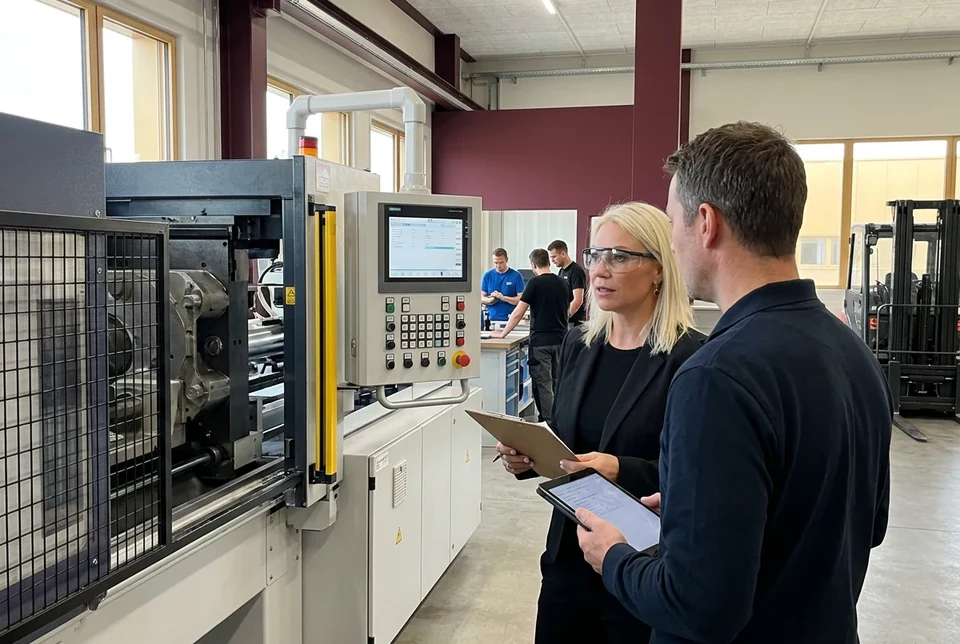
45 minutes, no obligation. We clarify where your lean programme stands and whether I'm the right person for it.