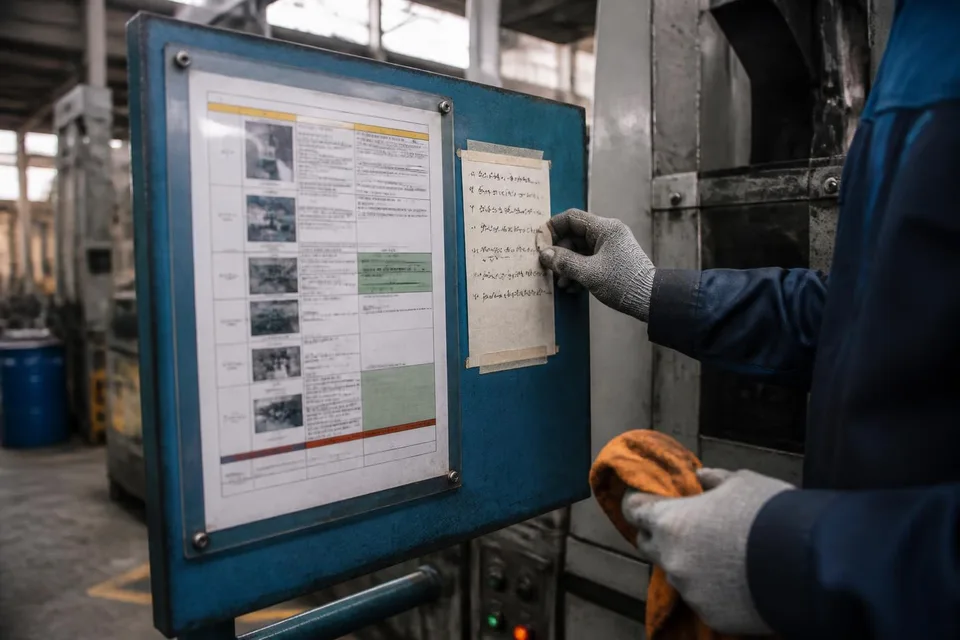

On almost every line I walk onto, a standard is hanging. Laminated, with a photo, with the signature of the production manager. And on almost every line the shift works differently from what the standard shows. Not out of defiance. Mostly because the standard never matched what the people on the spot actually do.
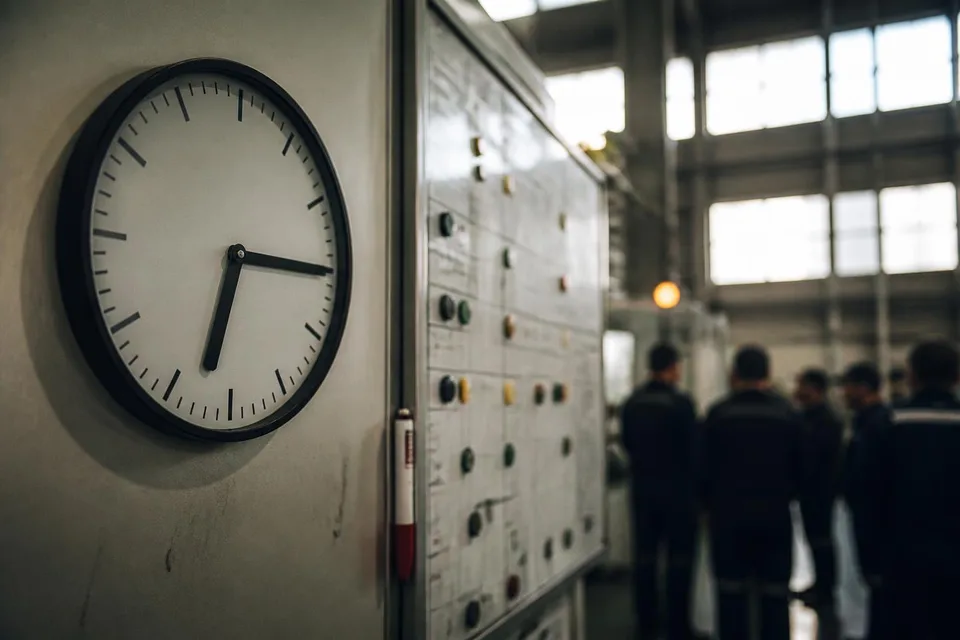
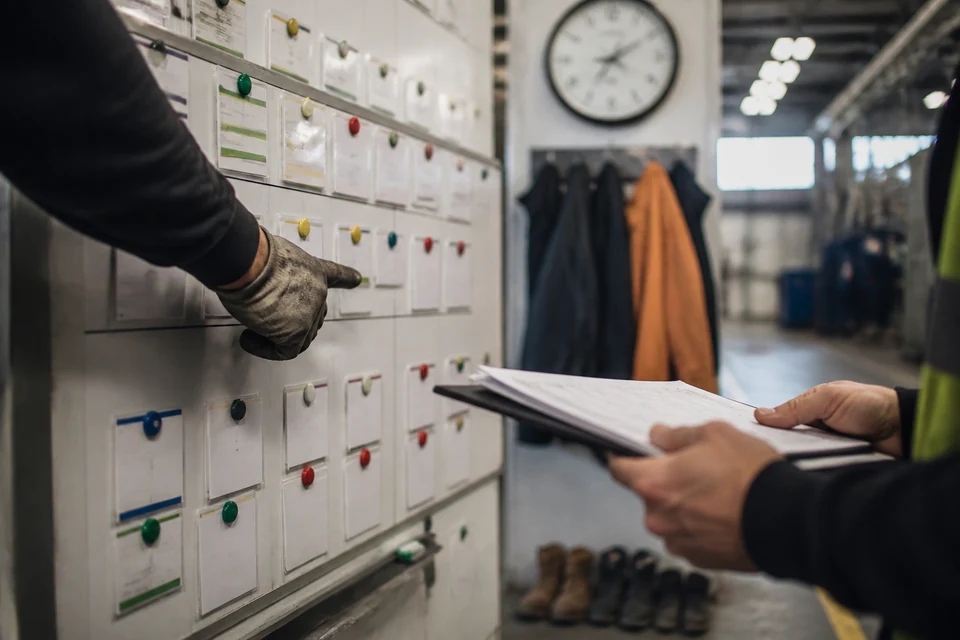
Then there are the boards. Shopfloor boards, KPI boards, action lists. In many plants they are the most visible result of the lean programme. And in many plants they are the most visible sign that it is no longer alive: figures from weeks ago, actions without owners, KPIs nobody discusses.
This article is for production managers and plant managers who are wondering whether standards and boards deliver anything at all. My answer: yes, but only if you understand them correctly. A standard is not a document, and a board is not a notice.
Why standards die
A standard rarely dies loudly. It dies because one of three things has happened. It was written by someone who does not do the work themselves. It was created once and never touched again, although material, tools or takt have changed. Or it describes an ideal state that was never achievable on the line.
A plant with several assembly lines that I supported had standard work sheets for every workstation. They were clean, complete and praised in the audit. When I stood on the line with the operators, one of them showed me how he really does the work step. It was faster and safer than the sheet. He had never reported it, because nobody had asked him. The standard was not wrong, it was outdated, and the better solution lived only in the head of a single employee.
That is the core: a standard that is not created with the people who carry it out is a wish of management. And nobody keeps to wishes.
What a standard actually is
In the Toyota Production System, the standard is the best currently known way of doing a job. The word currently is decisive. The standard is the basis for improvement, not its end. Without a standard there is no deviation, without deviation no problem, without a problem no improvement. That is why the PDCA cycle according to Deming starts not with the idea, but with the current state.
Three requirements follow from that. The standard has to come from the people who carry it out, at least with them. It has to be so simple that it can be checked at the machine in a few seconds. And it needs an expiry date: whoever finds a better method changes the standard, and does so via a fixed route.
The same applies in the office. A standard for order clarification that the clerical staff did not write themselves is bypassed as soon as the first special case arrives. And special cases arrive daily.
What boards can do
A shopfloor board has exactly one job: it makes deviations visible so that they get talked about. Nothing more. It is not reporting to plant management, not a display for visitors and not evidence for the audit.
A good board answers three questions at a glance. Are we running to plan today, yes or no? If no, what is the cause? And who is taking care of it by when? Anything beyond that makes the board harder to read without making it more useful.
The real tool is not the board, but the conversation in front of it. Short, daily, standing up, with those who do the work. The board is only the occasion. Plants where the board is maintained but the conversation does not happen have a work of art, not a leadership instrument.
What boards cannot do
A board cannot replace leadership. I keep seeing plants where the boards were introduced in the hope that the teams would then manage themselves. That does not happen. If the production manager does not stand at the board regularly, ask questions and follow up on actions, the team loses its reason to maintain it.
A board cannot replace a missing standard either. If there is no target, there is no deviation, and the board only shows numbers without meaning. And it cannot make a bad KPI good. Whoever writes a figure on the board that the team cannot influence produces frustration, not improvement.
And finally: boards cannot do too much. A board with ten KPIs, three action lists and the holiday planning is no longer a board, but a pinboard.
Building standards that last
My approach is unspectacular and takes longer than laminating.
- Observe before you write. I stand on the line with the operators and watch how the work is done today, across several shifts. Usually there are three variants, and one of them is the best.
- The best variant becomes the standard together with the team. Not by production planning, but with them and with the shift that masters the step best.
- As short as possible. One photo, three key points, the why behind each point. What does not fit on one page is not a standard, but a training document.
- A fixed route to change the standard. Whoever has a better method says so at the board, the team checks, the standard is adjusted. No form, no approval round through three departments.
- Check, do not control. Management regularly looks at whether the standard still fits and asks what is getting in the way. That is the difference between audit and gemba.
In the office the same route works with screenshots instead of machine photos and with clerical staff instead of operators. The principles are the same.
The rhythm decides
Standards and boards hold when there is a rhythm behind them. Daily, the short conversation at the board. Weekly, the production manager's look at the open actions. Regularly, the question to the shift about which standard no longer fits.
I have seen in plants how that works without any additional method. The boards were the same, the standards were the same. The difference was that management was there and asked questions. If you take only one thing from this article, take this: the board is the place, the conversation is the tool, and the rhythm is what holds.
In short
- Standards die when they do not come from those who do the work, or when they are never adjusted again.
- A standard is the best currently known method, not a document. It needs a fixed route for change.
- A board has one job: making deviations visible so that they get talked about.
- Boards replace neither leadership nor standards nor good KPIs. Too much on the board makes it useless.
- The conversation at the board is the tool, the daily rhythm is what holds.
Frequently asked questions
Frequently asked questions
How many KPIs belong on a shopfloor board?
So few that the team can discuss them in a short conversation. Usually safety, quality, performance and delivery date are enough, plus the open actions. Every KPI has to be something the team can influence. What the team cannot influence belongs in the report to plant management, not on the board.
Who should write standards, production planning or the line?
Both together, with a clear division of roles. The line knows the actually best method, production planning ensures form, safety and consistency across shifts. A standard that production planning writes alone gets bypassed. One that the line writes alone applies to one shift only. The interplay makes it robust.
What to do if the boards have not been maintained for months?
Do not order new boards. First ask the team why the old one is no longer maintained. Usually the answer is that nobody looked at it any more. Then the production manager personally restarts the daily conversation at the board, reduces the board to the essentials and follows up on the actions. Maintenance follows the interest of management, not the other way round.