01
The boss facilitates the workshop himself. Everyone knows which result he wants, and they deliver it. The real issues stay under the table.
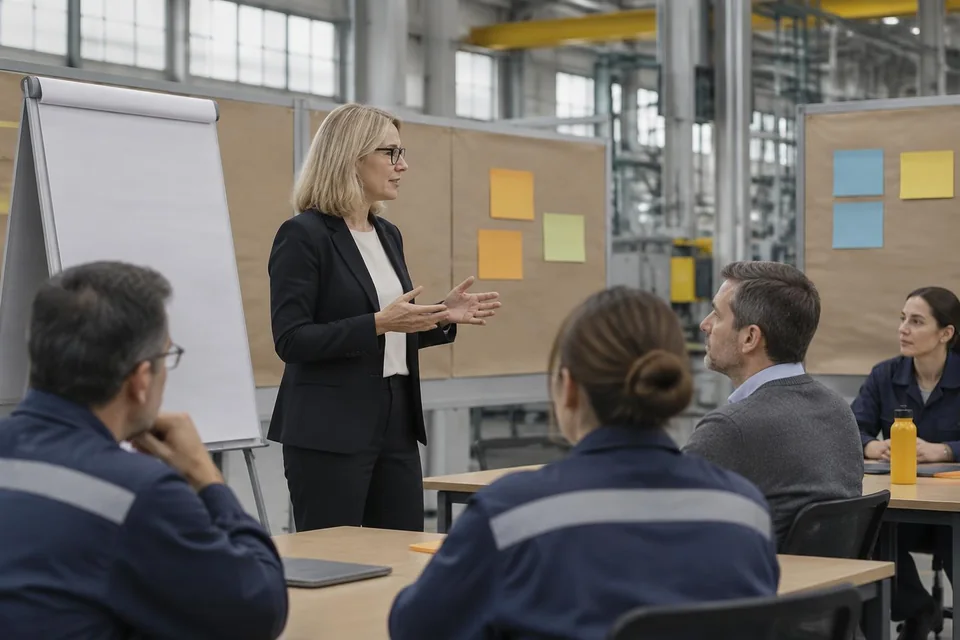
workshop facilitation
A good workshop ends with decisions, owners and deadlines. A bad one ends with photos of flipcharts that nobody looks at again. The difference is the facilitation. I facilitate strategy and vision workshops, change workshops, World Cafés and large-group formats for manufacturing companies, with the experience of over 100 workshops and trainings.
Workshops are the standard tool for everything that does not get solved in day-to-day work.
Facilitation is a skill in its own right, independent of subject expertise. Whoever facilitates holds the process, not the content: they make sure everyone gets a say, that the group stays with the question, that conflicts are worked through rather than avoided, and that there is a result at the end. Anyone who is also the boss or personally affected cannot do that, because they are a party to it.
External workshop facilitation brings three things. Neutrality: I have no interest in the result, only in a good process. Method: I know which format suits which question, from a strategy workshop with eight people to large-group facilitation with a hundred. And experience with plants: I know how a foreman argues and how a managing director does, and I can bring both into the same room.
Booking facilitation with me always includes preparation. One workshop day needs at least half a day of preliminary conversations, so that I know the question, the participants and the hidden issues before I enter the room.
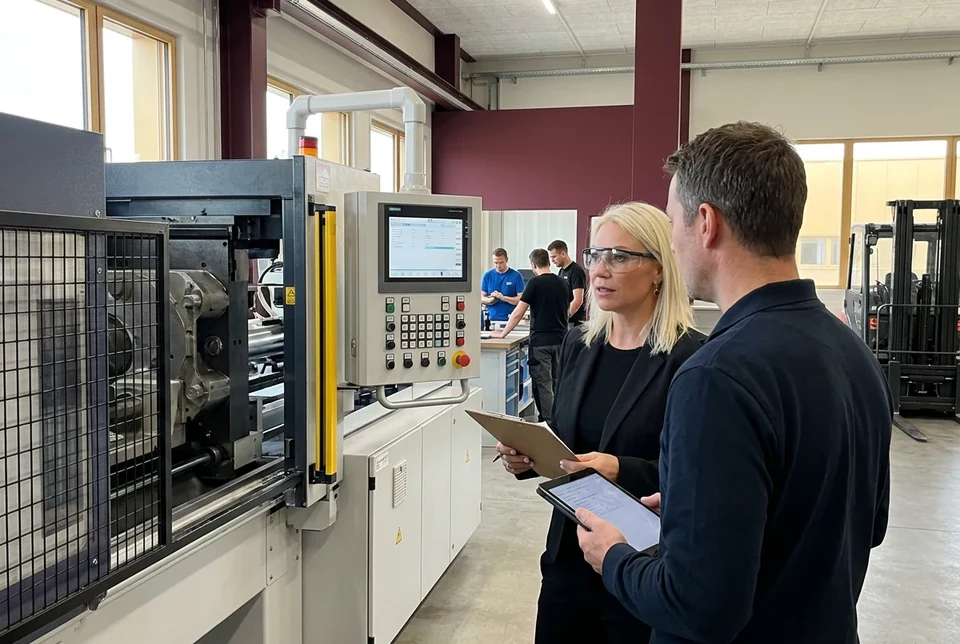
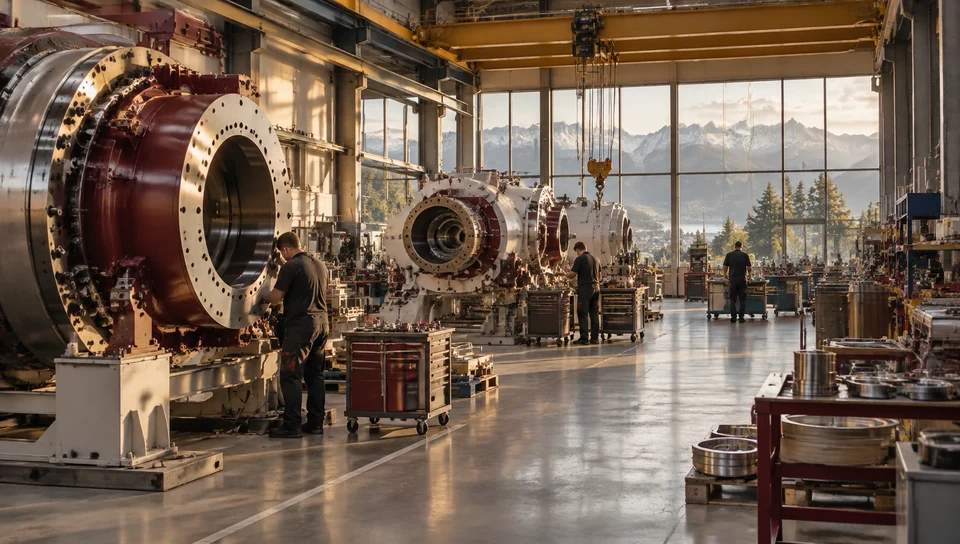
Every facilitation with me follows the same sequence, whatever the format:
A conversation with the client: which question should the workshop answer, what has to be on the table at the end, who decides afterwards? No clear objective, no workshop.
Short interviews with some of the participants. I want to know the issues that will not be said in plenary.
A run sheet with timings, methods, questions and materials. I choose the format by objective and group size, not by habit.
I hold the process, the group delivers the content. I ensure participation, focus and decisions, and I name what is happening in the room.
Minutes of results within a few days: decisions, owners, deadlines. No photos of flipcharts without context.
On request, a follow-up session in which implementation is reviewed.
A workshop that has a result and belongs to the group:
A clarified assignment with objective, expected outcome and the decision path afterwards.
A workshop design that fits the question, the group and the venue, including materials.
Neutral facilitation that secures participation and brings about decisions.
Minutes of results with decisions, owners and deadlines within a few days.
For large groups: consolidation of the contributions into a readable overall picture.
On request: a follow-up session and facilitation training for your own people.
Intro call
You describe your starting point, I tell you openly whether and how I can help.
Frequently asked questions
The World Café is a large-group facilitation method for 20 to over 100 participants. The group spreads out across tables of four to six people and works on a question, usually on writable tablecloths. After 20 to 30 minutes everyone changes tables; only one host stays and summarises for the newcomers. After two to three rounds the insights are brought together in plenary. The format suits mood checks, idea collection and the start of change processes, because it involves everyone in a short time and removes hierarchy from the conversation.
Whenever the person who would otherwise facilitate has an interest in the result. That applies to strategy workshops, in which the managing director should be a participant rather than the facilitator; to clarifications between departments, where any internal facilitator is seen as belonging to one side; to change workshops, in which criticism of management is supposed to be voiced; and to large groups, which need methodical craft. External facilitation is also worthwhile when earlier workshops have produced no result. For routine meetings and small working groups, a well-trained internal facilitator is usually enough.
With a clear question and an honest data basis. The question is not: what do we want to do? But: what are the two to five things that have to be different in three years? The data basis covers market, customers, competition, key figures and the assessment of the managers, which I gather in preliminary conversations. Participants should know beforehand what will be decided at the end, and the managing director should be ready to be a participant in the workshop rather than the chair. One to two days away from the plant, without the phone, are time well spent.
That depends on the objective. For decisions and strategy, five to twelve people are ideal; above that it becomes hard to really decide. For clarifications between departments, both sides should be represented with the same roles, usually eight to sixteen. For participation and idea collection there is no upper limit if the format is right: World Café and Open Space work with 30 just as with 150. More important than the number is the composition: are the people who can decide in the room, and the people affected by the decision?
She holds the process and leaves the content with the group. She asks questions instead of giving answers, tolerates silence and makes sure the quiet ones get a say and the loud ones do not dominate. She names what is happening in the room, even when it is uncomfortable, for instance when the group is avoiding a topic. She knows enough methods to stay flexible and enough about the subject to understand what is being discussed, and she leads the group to a result without dictating it. In plants, she also has to be able to talk to foremen and managing directors alike.
A clarification or kick-off workshop usually takes half a day to a day. Strategy and vision workshops need one to two days, because decisions need time to mature. A World Café is done in two to three hours; a large-group event with several formats takes a day. Add to that the preparation: at least half a day of preliminary conversations and design per workshop day, often more. And the follow-up with minutes of results. A workshop held without preparation is usually a meeting with a flipchart.
Yes, with limitations. Clarification and working workshops with up to twelve people work well online if digital whiteboards and clear rules are used; I facilitate them regularly. Strategy workshops and conflict clarifications are considerably more effective on site, because the mood and the side conversations are part of the process. Large-group formats such as World Café are possible online but lose a lot; I recommend them in person. Hybrid, with part of the group in the room and part dialled in, is the most difficult format and needs a second facilitator for the online group. I will tell you honestly when online is enough and when it is not.
Yes. A facilitation training for managers, project managers or internal Lean champions takes one to two days and covers the basics: clarifying the assignment, questioning technique, visualisation, steering groups, dealing with disruptions and decision-making procedures. Participants facilitate themselves during the training and get feedback. Afterwards, on request, I accompany the first real facilitations with a debrief. For companies that have many workshops and regular meetings, this is the more sustainable solution than any external facilitation.

45 minutes, no obligation. Tell me which question your workshop should answer.