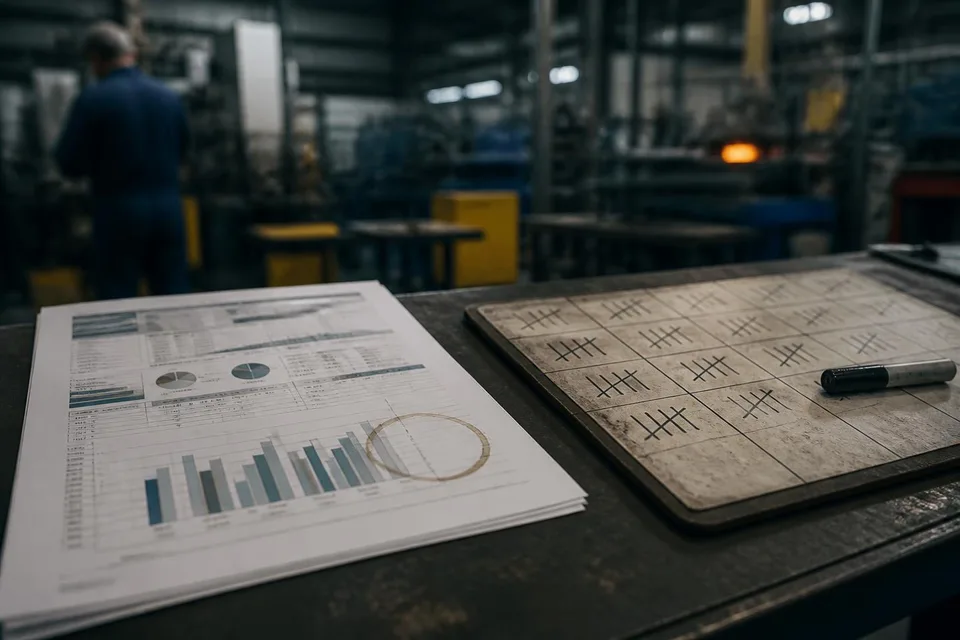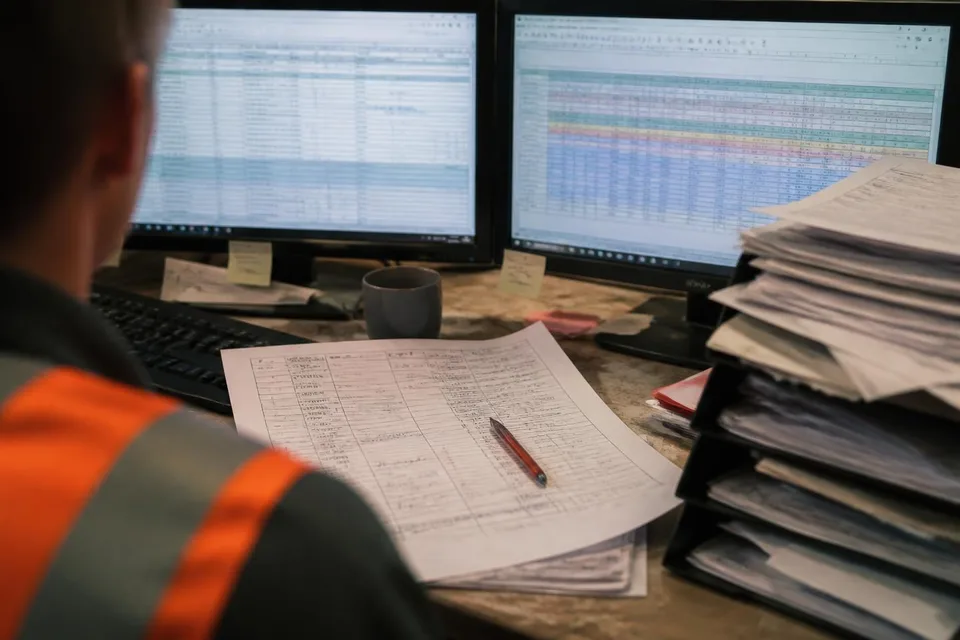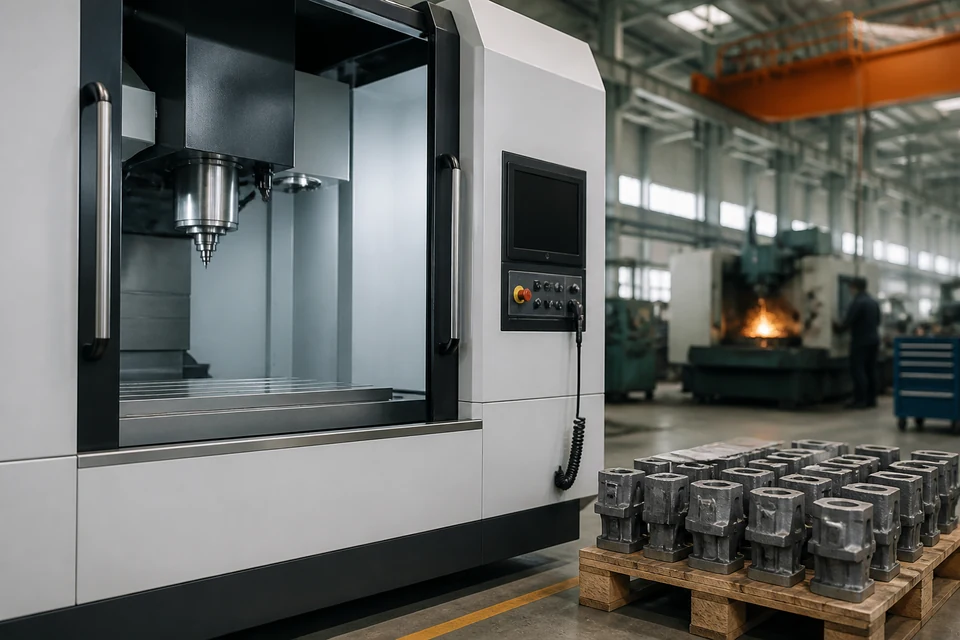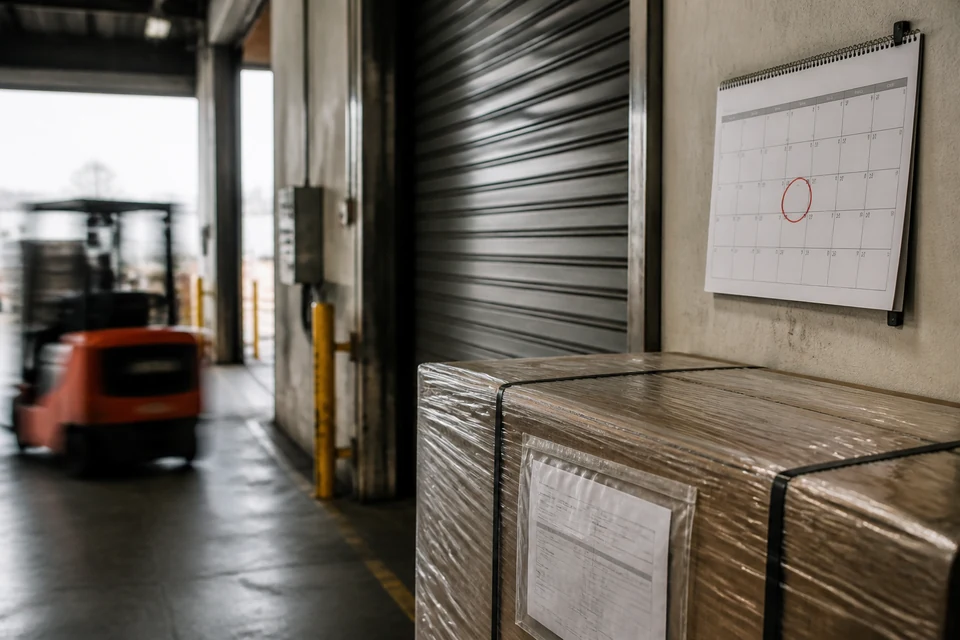

The machines are running. Utilisation is high, the shifts are full, maintenance has the equipment under control. And yet the customer calls because the delivery is late again. The production manager points to the figures: manufacturing delivered as planned. Sales points to manufacturing. Purchasing says the material was there on time. And nobody can explain where the three weeks went.
I know this round from many plants, from group sites as well as mid-sized companies. It almost always has the same cause: the value stream is only looked at in the hall, from goods receipt to dispatch. Everything before and after counts as administration. And that is exactly where the bottleneck sits.
This article is for executives, plant managers and production managers who have optimised manufacturing and still see no delivery performance. I describe why that is and how to think the value stream from customer order to delivery.
What a bottleneck really is
The bottleneck is the point in the value stream that determines the throughput of the whole. Everything that gets faster before it piles up in front of it. Everything that gets faster after it waits for it. That is not a new insight, but in most plants it is restricted to the machines. The bottleneck machine is sought, worked on with changeover workshops and maintenance, and then considered solved.
Yet the bottleneck can be any station at which an order waits. Order clarification, which sends queries to the customer. Engineering, which approves drawings. Purchasing, which collects requirements. Production planning, which maintains bills of materials. Dispatch, which waits for paperwork. At every one of these points more time can sit than at any machine.
A plant with several assembly lines that I supported had optimised its bottleneck machine for months. Lead time barely changed. When we tracked the order from the purchase order onwards, it turned out: the order sat in technical clarification longer than the entire manufacturing took. The machine had never been the bottleneck.
Why the view ends at the factory gate
There are three reasons for that, and none is ill-intentioned. First, the hall is visible. You see inventories, stoppages, people waiting. An in-tray in the office always looks the same, whether it is empty or contains an order from two weeks ago. Second, lean has its roots in manufacturing, and most people responsible for lean come from there. Third, responsibilities are separated: the production manager is responsible for the hall, sales for clarification, purchasing for material. Nobody is responsible for the order as a whole.
The result is a value stream that has an in-tray at every departmental boundary, and every in-tray is a potential bottleneck that nobody measures. In the hall we call that buffer stock and fight it. In the office we call it filing and accept it.
Mapping the whole value stream
My approach is always to map the value stream from customer order to delivery, without exception. Concretely that means: start with a real order, not with a process diagram. At every station ask what happens, how long it takes and how long the order waited beforehand.
- Sales and order entry: how does the order come in, what is typically missing, how often does it go back to the customer?
- Technical clarification and engineering: who checks, who approves, how long does the order wait for approval?
- Purchasing and scheduling: when is ordering done, is it batched, how long does procurement take compared with manufacturing?
- Production planning: when is the order ready for manufacturing, and what holds it up?
- Manufacturing: process time, waiting time, changeover, rework.
- Dispatch and invoicing: do the goods wait for paperwork, for the carrier, for approval from accounting?
At the end there is a picture that sets process time against lead time. And almost always it shows: manufacturing is a small part, the waiting times before and after are the big one.
Working on the bottleneck in the right place
Once the bottleneck is found, the same applies as in the hall: it gets priority. If it lies in technical clarification, another changeover workshop on the line achieves nothing. Then the task is to relieve clarification: completeness check at intake, standard cases without an approval round, a deputy for the person everything hangs on, a short daily look at stuck orders.
And this applies: everything else is subordinate to the bottleneck. Manufacturing should not get faster than the bottleneck can deliver, otherwise only the inventory of half-finished orders grows. That is hard for production managers who are measured on utilisation. But a plant that manufactures parts for which no clarified order exists yet produces inventory, not value.
In a group-owned plant the question is often who is even allowed to work on the bottleneck outside the hall. In a mid-sized company it is more a question of who has the time for it. In both cases it takes someone who is responsible for the order as a whole, at least for the duration of the improvement.
The bottleneck moves
Whoever solves one bottleneck finds the next. That is not failure, but the logic of the value stream. If technical clarification is faster, things may pile up in purchasing. If purchasing is faster, in production planning. That is why value stream mapping is not a one-off exercise, but a rhythm.
I recommend mapping the value stream anew at regular intervals, with the same simple approach: one order, all stations, process time against lead time. That takes a day and shows where the next lever lies. And it keeps the view on the whole, instead of letting it drift back to the factory gate.
What changes for leadership
The biggest change is not methodological, but a question of attitude. Plant management no longer looks only at the utilisation of the hall, but at the lead time of the order. The KPI that counts is the time from order receipt to delivery, not the hours at the machine.
That changes conversations. Sales becomes part of the value stream, not the client of manufacturing. Purchasing is a station with waiting time, not a department with its own world. And the executive gemba walk also leads through the office, to the in-trays, not only to the line. Whoever has seen that once never again looks for the bottleneck only in the hall.
In short
- The bottleneck is any station at which orders wait, not only the slowest machine.
- The view ends at the factory gate because inventories are visible there and nobody is responsible for the order as a whole.
- Always map the value stream from customer order to delivery, with a real order, station by station.
- A bottleneck outside the hall means: relieve clarification, approvals and purchasing, do not accelerate manufacturing beyond it.
- The bottleneck moves. Value stream mapping is a rhythm, not a one-off exercise.
Frequently asked questions
Frequently asked questions
How do I find out whether the bottleneck is in the hall or in the office?
Track a real order from purchase order to delivery and note at every station how long it was worked on and how long it waited. Set the sum of processing time against the total lead time. The biggest waiting times show the bottleneck. In most plants they lie before manufacturing, in clarification, approval or procurement.
Should we still keep optimising manufacturing?
Only as far as the bottleneck allows. A manufacturing operation that is faster than the order clarification before it produces inventory and premature work, not delivery performance. Invest the energy first where the order sits longest. Once that bottleneck is solved, it moves on, and then the hall may be next in line again.
Who should be responsible for the value stream across all departments?
For the duration of the improvement it takes one person who keeps the order as a whole in view and is allowed to ask questions in every department. That can be plant management, a head of operations or a person with a lateral mandate, without disciplinary authority but with backing from the executive team. Without this role every department stays with its own part, and the waiting times at the interfaces remain unnoticed.