
Why do the two departments that depend on each other most find it so hard to work together? Sales lives on production delivering. Production lives on sales bringing in orders. And yet in many plants it sounds like this: sales promises dates that nobody can keep. Production hides behind capacity and sequence. Each side has a story in which the other is to blame.
The price for this is high, but hard to see. It sits in rush orders that tear up the plan. In call-backs to the customer. In meetings that serve only to justify. In good people on both sides who at some point stop feeling responsible for the whole.
I have seen this conflict in corporate plants and in family businesses, in different forms, with the same structure underneath. It is almost never a problem of the people. It is a problem of the wall that has been drawn between them.
Two departments, two truths
Sales is measured on revenue and customer satisfaction. Production on utilisation, cost and on-time delivery. Both are reasonable. Together they produce a conflict that arises afresh every day.
For sales, every customer matters, and the customer wants it fast. So a date is quoted that goes down well with the customer. For production, every change to the plan is a loss: changeovers, replanning, moving material, overtime. So it pushes back. Both act correctly by their own goals and wrongly for the company.
In lean thinking this is a classic case of mura, unevenness. It is not that there is too much work, but that it arrives in waves that nobody has smoothed. And the waves arise at the boundary between the departments, because nobody there is responsible for the handover.
Where the conflict really arises
When I look at the interface, I almost always find the same gaps. They are unspectacular, and that is exactly why they persist for years.
- Sales does not know the real capacity. It knows a number from the system, shaped by wishful thinking and outdated master data.
- Production does not know the customer situation. It sees an order with a date, not the customer for whom that date decides a follow-up order.
- Nobody defines what urgent means. So everything is urgent, and urgent no longer means anything.
- Changes run through people, not through a process. Whoever knows the right foreman gets their order pulled forward. Everyone else waits.
- The meeting between the two only takes place once something has gone wrong. Then it is about blame, not about solutions.
Each of these gaps is a handover error. Together they form what is referred to in the corridors as a culture problem.
How it went in a plant with series and custom production
A plant manufactured series products and, alongside them, customer-specific variants. Sales liked selling the variants because the margin was better. Production hated them because they disrupted the takt. The weekly planning meeting had become an arena. People went in with lists and came out with accusations.
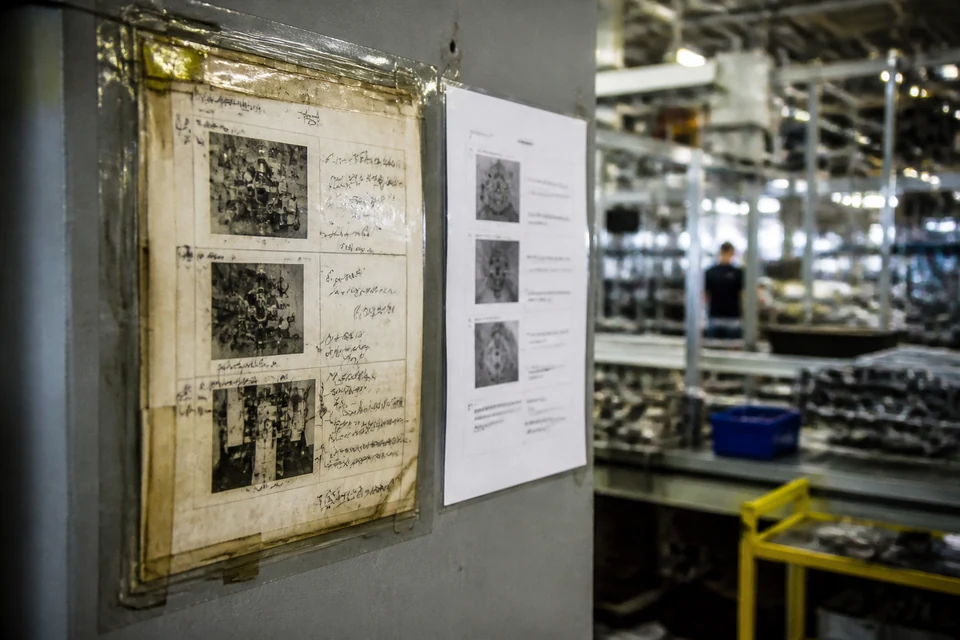
We changed two things. First, sales and production jointly mapped the path of an order from quotation to delivery, on a wall, with all the handovers. In doing so, sales saw for the first time what changeover effort a variant triggers. And production saw for the first time what the customer actually needs, and that it was often fewer special requests than the order suggested.
Second, a fixed rule for rush orders was agreed: whoever wants to pull an order forward names which other order moves back to make room. Sales thereby got a real decision instead of a wish, and production a reliable plan. The planning meeting became shorter and quieter. Not because the people became nicer, but because the boundary had been given a process.
The boundary needs an owner
The core of the problem is easy to name and hard to solve: the interface belongs to nobody. The sales manager is responsible for sales, the production manager for production. For what happens in between, there is no position on the organisation chart.
It does not need a new department. It needs an agreement on who is responsible for the handover. In some plants that is production planning with a clear mandate. In others, a short daily meeting between internal sales and production control, with fixed questions: what is new, what is changing, what is at risk. What matters is not the form, but that the handover belongs to someone and that both managers back them.
That is a leadership decision, and it sits with the executive management. As long as both departments are only measured on their own goals, every agreement at the boundary will break under the first quarter-end pressure.
What you can do as executive management
The conflict is structural. That is why appeals to team spirit do not solve it, and neither does a joint barbecue. What works in my experience:
- Set a shared KPI. On-time delivery to the customer belongs to both, not just to production. If it drops, both sit at the table.
- Have both sides map the order path together. Value stream mapping across the departmental boundary is the most effective remedy against mutual myths.
- Define urgent. A rule that everyone knows replaces a hundred discussions.
- Demand a process for changes. No pulling forward through the back channel, but a route that is the same for everyone.
- In meetings, listen for blame and ask every time: which handover was missing? That shifts the view from the person to the process.
And visit both worlds. An executive management that knows sales only from figures and production only from reports will never understand the conflict.
When the conflict has already become personal
Sometimes the boundary has generated so much friction over the years that it is no longer about processes. Then two managers face each other who no longer believe a word the other says. In that case, process work alone is not enough. First there needs to be a facilitated conversation in which both say what they need from the other and what they have not been getting so far.
That is uncomfortable, and it rarely succeeds without someone from outside who is not a party to it. But it is the precondition for the new processes having any chance at all. A process that two people do not want will not be lived, no matter how good it is.
The good news: in almost all the cases I have supported, both sides wanted the same thing. Satisfied customers, a calm plan, no firefighting. They had just never talked about it at the same table.
In short
- The conflict arises from opposing goals, not from difficult people. Both sides act correctly by their own yardstick.
- The interface belongs to nobody. Give the handover an owner and a process.
- A shared KPI such as on-time delivery to the customer forces both to one table.
- Define what urgent means, and route changes through a path that is the same for everyone.
- If the conflict has become personal, a facilitated conversation comes first, then the process work.
Frequently asked questions
Frequently asked questions
Should sales get access to production planning?
Visibility yes, intervention no. Sales should be able to see how capacity is allocated and which dates are realistic before it commits to anything with the customer. Changes to the plan run through the agreed route, not through direct access. That keeps responsibility clear, and sales quotes dates that production can keep.
How often should sales and production coordinate?
Short and frequent beats long and rare. A daily meeting of a few minutes between internal sales and production control catches most changes before they become a problem. Add a weekly round of the managers for capacity and outlook. The big monthly meeting in which everything is discussed is usually the one in which nothing is decided.
What if the executive management itself pushes rush orders through?
Then that is the first point that has to be clarified, because otherwise every rule at the boundary is worthless. The executive management may set priorities, but through the same route as everyone else: name what is pulled forward and what waits as a result. That costs them little and sends both departments the signal that the agreement is meant seriously.