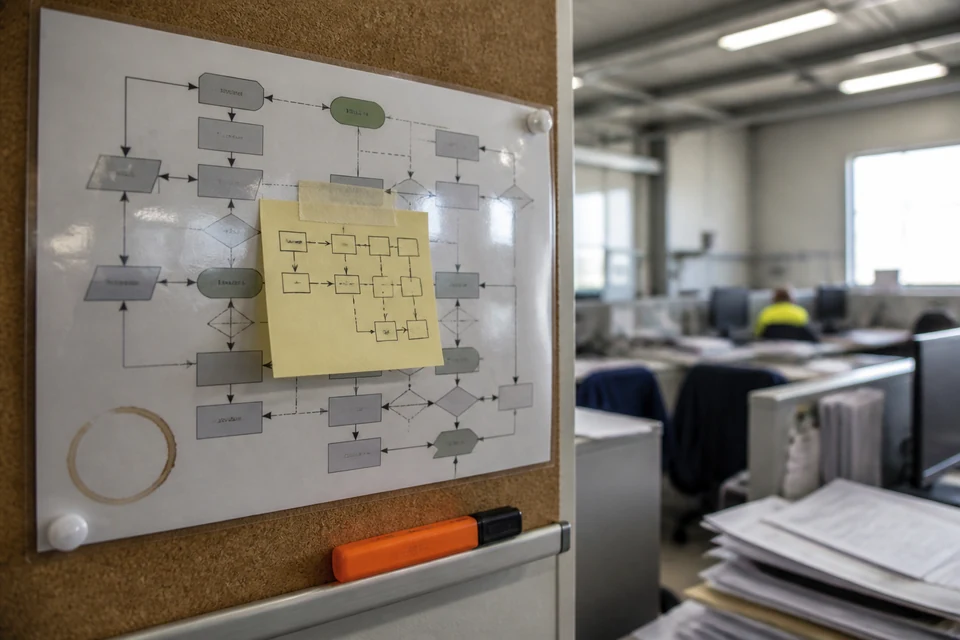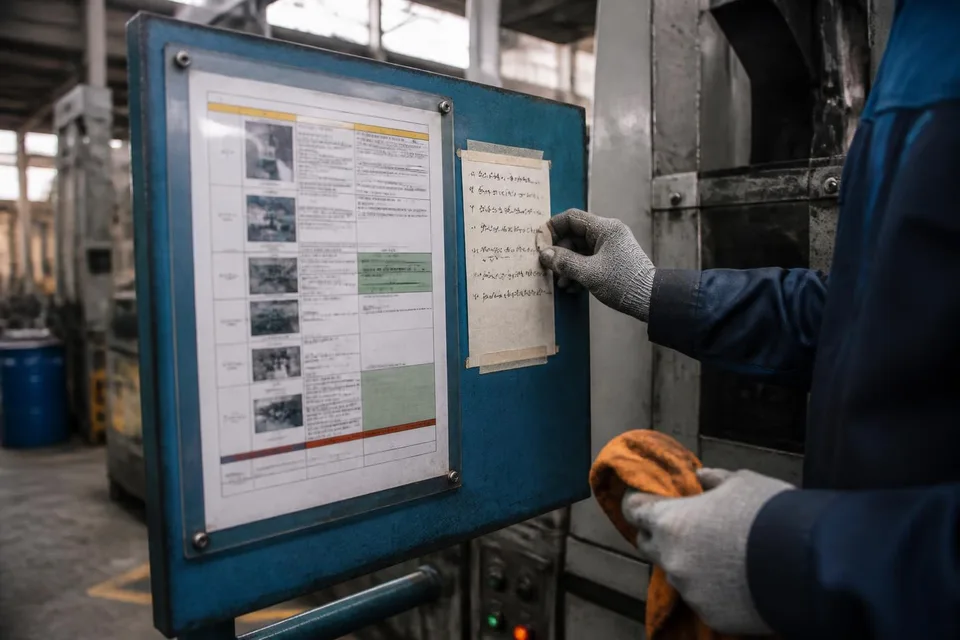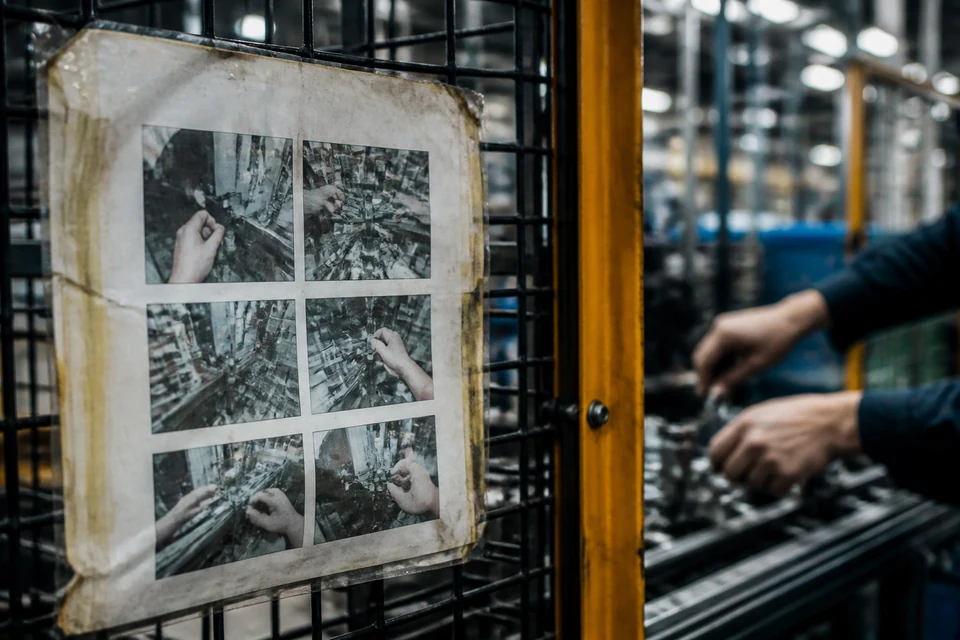

Go to any machine on your shop floor and look at the laminated instruction next to it. Then watch what the person at the machine actually does. In most plants I know, those are two different things. Not out of malice. But because the instruction describes how someone years ago thought it should be done, and the person at the machine knows how it really works today.
The same picture in the office: the process description sits in the quality manual, the clerks work from their own checklist. Both are called a standard. Only one of them is lived practice.
I have introduced, discarded and rebuilt standards in many plants and administrations. The most important lesson: a standard is not a rule. It is the best way of working that we currently know. As soon as you understand it that way, everything changes about how you write it, where it hangs and who maintains it.
What Toyota meant by standard
In the Toyota Production System, standard work is the foundation of every improvement. The often-quoted line: without a standard there is no improvement. That tends to be read as if it were about discipline. Something else is meant.
If every shift works differently, nobody can say whether a change has achieved anything. The result fluctuates anyway. The standard is the baseline against which every idea can be measured. It is not the end point but the starting point. And it belongs to the people who do the work, not to the department that manages the manual.
Something uncomfortable follows from that: a standard that has hung unchanged for years is not a sign of stability. It is a sign that either nobody is improving any more, or that the improvements are bypassing it.
Three questions for every standard
When I get to know a plant or an office area, I test standards with three questions. They are simple, and they expose things quickly.
- Would the best person in the team do it exactly this way? If not, the standard does not describe the best known way, but a convenient or an outdated one.
- Can a new person work from the standard without asking anyone? If not, the essential part is missing: the sequence, the hand movements, the check points, the why.
- When was it last changed, and by whom? If the answer is: at certification, by the quality department, then it is a document, not a working tool.
A standard that passes all three questions is rare. But it is not hard to build either. It just comes into being in a different place than usual: at the workstation, not at the desk.
How a standard was created in assembly
A plant with several assembly lines had an instruction for a bolting operation with many steps, in a font size that could not be read at the line. The three shifts did it three ways. One of them was faster and produced less rework, but nobody knew that, because nobody had compared.
We brought the three shift leaders to the line for an hour, had each variant demonstrated and decided together which combination of hand movements was the best. The result fitted on one page with photos, in the order in which the hands move, with the two points marked where errors occur. The shift wrote it, not the quality department. It was hung at eye level, where the person stands.
The interesting part came afterwards. Because the people felt the standard was theirs, suggestions to change it came within a few weeks. That is exactly the purpose. A standard that nothing is ever changed on has stopped living.
Standards in the office look different but work the same way
In administration nothing hangs on a machine, but the logic is the same. A good standard in order processing, purchasing or HR administration answers: what is the trigger, which information has to be complete, which steps follow in which order, who decides what, and how do I recognise that the transaction is finished.
Most process descriptions I see in manuals answer the first two questions and leave the last three open. That is why the private checklists appear. They are the real standard, and they are good. They are just invisible, and when the person leaves, they leave with them.
The way forward is the same here: bring the people who operate the transaction to one table, lay the variants side by side, agree the best known way, and file it where it is visible during the work. Not in the manual, but in the tool or on the checklist that is used anyway.
What keeps a standard alive
A standard does not die suddenly. It dies when three things are missing.
First: the check. Someone has to look regularly at whether people are working to the standard, and not as a control but as a question: does it still fit? In shopfloor management that is the team leader's job, in the office it is the department head's. Those who do not look do not find out where the standard sticks.
Second: the route to change. When a person at the line has found a better way, it has to be clear how it becomes the standard. Without an application form, without weeks of waiting, with a short check in the team. If the route is too long, the better way is simply done in secret, and the standard stays wrong.
Third: ownership. A standard needs a person or a team that guards it. Not the quality department, which only manages the document, but someone who does the work and is proud that it is the best known way.
The difference between a rule and a standard
A rule says: this is how you must do it. A standard says: this is how we currently do it best, and if you know a better way, we will change it. The difference lies not in the paper, but in the attitude of the leadership.
Those who run standards as rules get obedience under observation and deviation without it. Those who run them as the best known way get people who think along, because their knowledge counts. The second is more demanding, because it requires listening. But it is the only one that lasts.
In short
- A standard is the best known way of working, not a rule. It is the starting point for improvement.
- Three test questions: does the best person do it this way? Can a new person work from it? When was it last changed?
- Standards are created at the workstation with the people who do the work, not at the desk.
- Private checklists in the office are the real standard. Make them visible instead of banning them.
- A standard lives through checking, a short route to change and clear ownership.
Frequently asked questions
Frequently asked questions
Do we need a standard for every activity?
No. Standards pay off where variation is expensive: in recurring activities that affect quality, safety or lead time. For rare or creative tasks, a clear framework is often enough. Start with the places where today every shift or every person does it differently and the result suffers as a consequence.
How do lived standards fit with our certification and the quality manual?
Very well, if you keep to the sequence. The standard is created at the workstation and maintained there. The manual refers to it instead of keeping its own version. That way there is a single truth, and the auditor sees that what is described is also done. Two parallel versions are the most common problem in audits.
What do we do when experienced employees reject the standard because they know better?
Then you have found your most important co-authors. Bring them to the table, have them demonstrate their way and compare together. Often their variant really is the better one, and it becomes the standard. Sometimes it turns out that it skips a check point that the other way includes. In both cases the standard wins, and the experienced person turns from opponent into guardian.