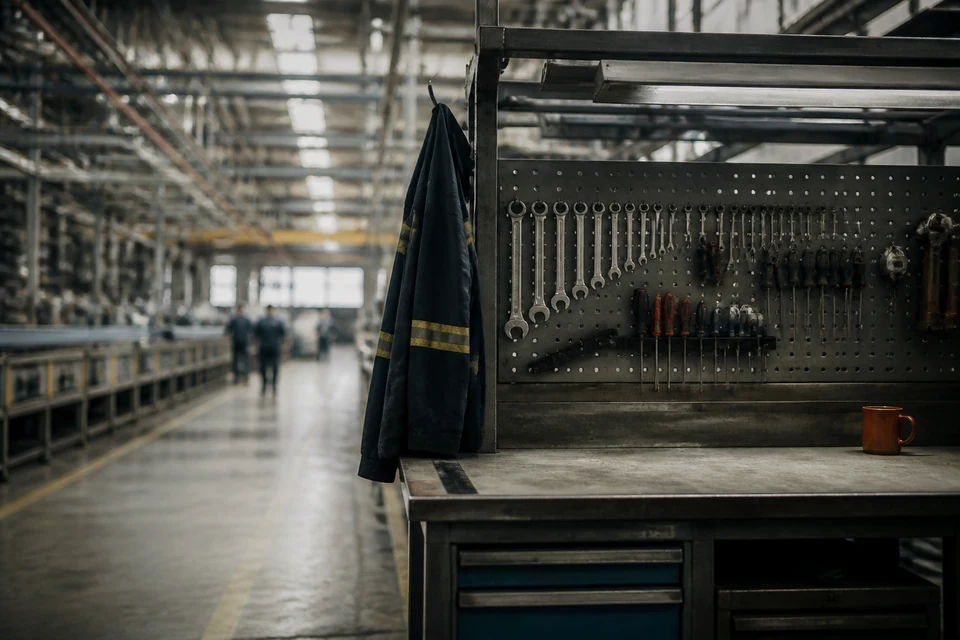

It is just before six. The hall is still half dark, the first forklift lights sweep across the floor, three people stand silently at the vending machine with coffee. The shift leader walks the line, looks at a terminal, shakes his head, makes a call. Two minutes later the line is running, but not with the order that is on the plan. Nobody finds that remarkable. It is Monday.
If you have ever seen this as a CEO, you know what I mean. If not, you know your plant from reports. From the monthly report, from the dashboard, from the plant manager's presentation. These documents are not wrong. But they are smoothed. They show results, not causes. They show the average, not Monday morning.
I have been supporting managers in plants and offices for many years, and the most effective appointment I can recommend to a CEO costs no consultant day: a full early shift, from the first minute to the last, on one line. Not as a walk-round. As presence. In this article I show you what you will see there, why reports cannot show it, and how to set up the day so that it does not degenerate into a factory tour.
Why the report cannot do it
A report is produced in several stages. The shift leader enters what he knows and what does not put him on the spot. The department head summarises and rounds. Plant management selects what is relevant for executive management. At every stage information is lost, and not at random. What disappears above all is the unpleasant, the unexplained and the small.
Then there is the time axis. The report shows the month. The disruption lasts twenty minutes. The missing raw material blocks a morning. The forklift that arrives late every time costs a few minutes per order. In the monthly total all of that is called "availability below target". What you learn from it: nothing you did not already know.
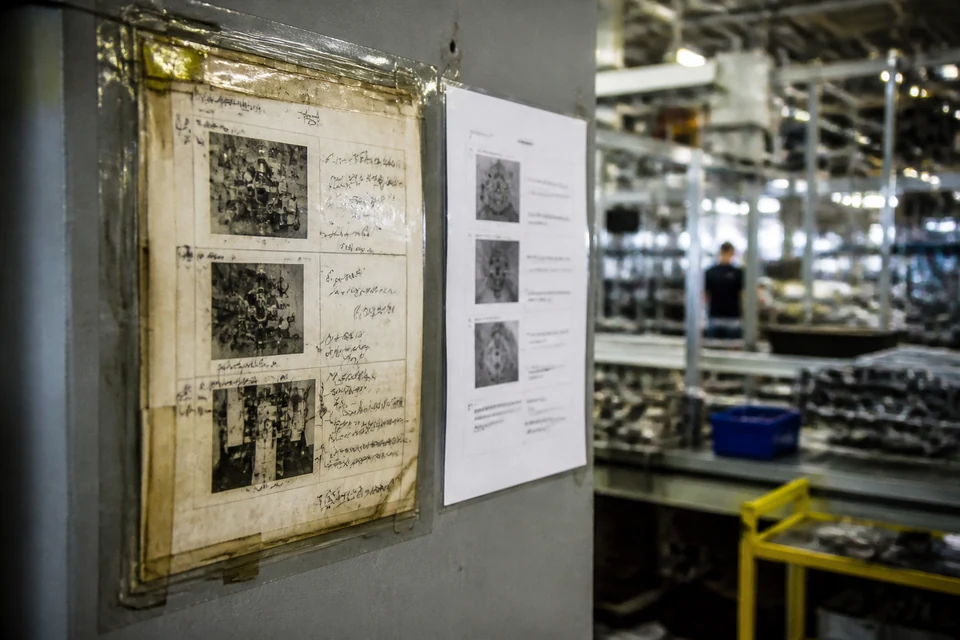
And finally the report lacks what I call the background noise. The tone in which the setter speaks to maintenance. The question the young colleague does not ask. The note hanging next to the official standard because the official one does not fit. None of that appears in any report, and all of it decides whether your strategy reaches the plant.
What you see in the first thirty minutes
The start of the shift is the most honest half hour of the day. Observe, in this order:
- The handover. Does it take place? Verbally, in writing, not at all? Who talks to whom, and who simply gets going?
- The first order. Is the one on the plan running? If not: who decided, and how did he know what to do instead?
- The material situation. Is the material for the first hours ready, or does the shift begin with searching and phoning?
- The machines. How many start up immediately, how many need a trick that only one person knows?
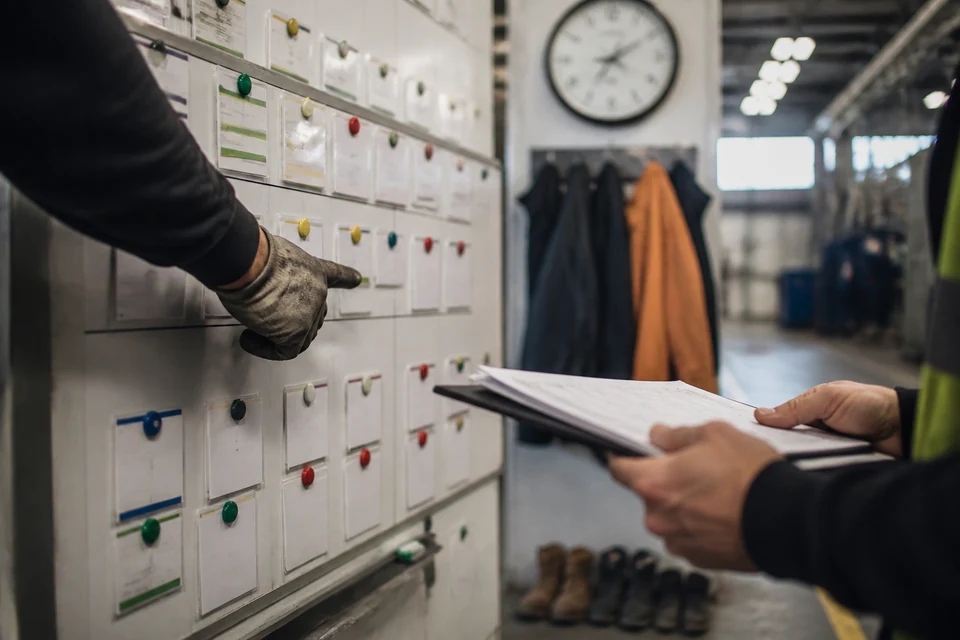
- The board. Is it up, is it current, does anyone look at it?
In a plant with several assembly lines I sat through the early shift with a CEO who had been reading delivery reliability in the report for years and did not understand why it was not rising. In the first half hour he saw that two of three lines started with a different order than planned, because the bill of materials had not been fully picked. The shift leader had his own rotation plan in his head that worked better than the system. The report said: "plan deviation, cause logistics". The report was right. It just had not explained anything.
The middle of the shift: where waste lives
From the second hour on it gets quieter, and now the really instructive part begins. The disruptions of the start have been dealt with, operations are running, and you see the normal state. The normal state is where waste lives, because nobody notices it any more.
Count walks. How often does someone leave their workstation to fetch something, ask something, look for something? Count waiting times. How often does someone stand idle because the upstream step is not finished, because an approval stamp is missing, because the gauge is somewhere else right now? Count duplicated work. Is something typed into the terminal and additionally written on a slip of paper? The seven types of waste from the Toyota Production System are not textbook knowledge but a way of seeing. Once you know them, you suddenly see them everywhere.
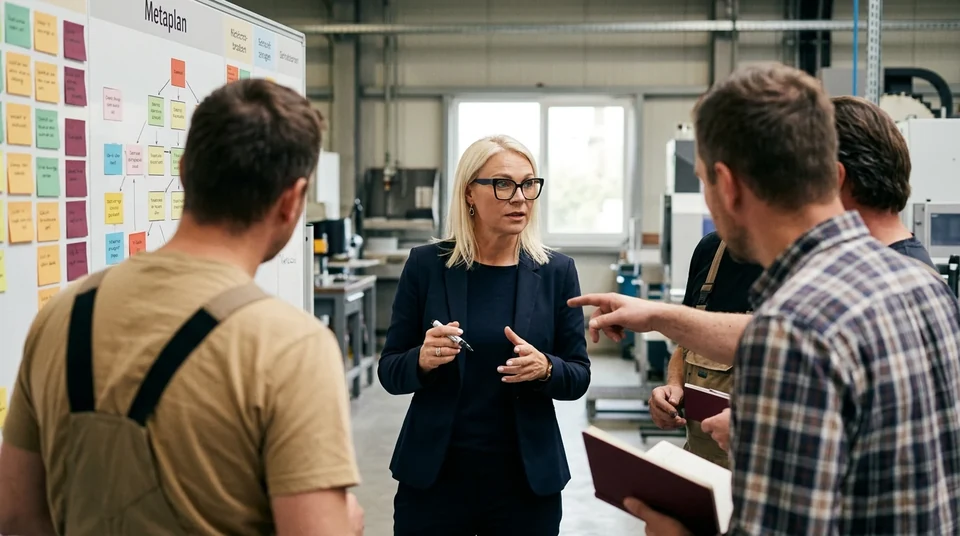
And talk. Not as the boss checking answers, but as someone who does not understand something. "Why do you do it that way?" is the most valuable question of the day, if it is meant honestly. The answers are almost always smart. The people on the line know why the process sticks. They just have not been asked for years, or they said so and nothing happened.
What the day does to you
Here comes the part that very few expect. The early shift does not only change your picture of the plant. It changes the picture the plant has of you.
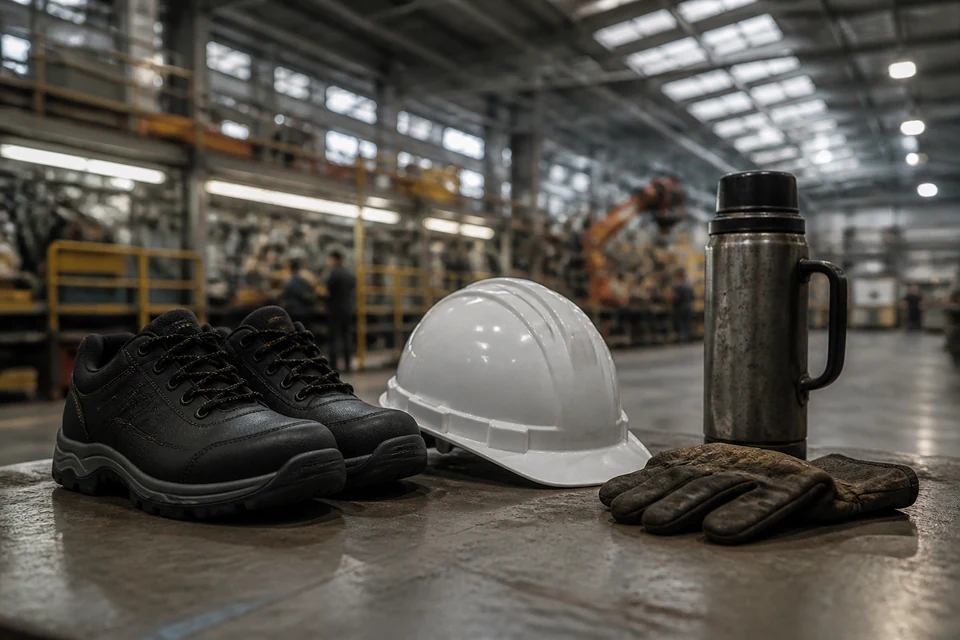
A CEO who stands at the line in safety shoes at six o'clock and stays until the end of the shift sends a message that no speech can replace: this matters to me. I want to understand it. The effect only lasts, however, if two things are right. First, you really stay. Whoever leaves for the next appointment after two hours has done a tour, and the people know it. Second, you act visibly afterwards. More on that in a moment.
There is a third effect, on yourself. After a full shift you are tired, your feet hurt, and you have a feeling for what it means to ride along with every disruption for eight hours. That feeling makes you a different leader. It does not make your decisions on takt times, headcount and shift models softer, but more honest.
How to set up the day
An early shift as a CEO is not an improvisation. A few rules have proved themselves for me:
- Announce it, but briefly. Plant management has to know, the line should know. What you must avoid: a week of preparation in which the line is tidied, the board updated and the difficult colleague sent on holiday. Say clearly that you want to see everyday life, not the show.
- One line, one shift, in full. Not three areas in one morning. Depth beats breadth.
- Without an entourage. No plant manager who explains every finding on the spot. If you take someone with you, then someone who can keep quiet.
- Notebook, not laptop. Write down what you see, not what you conclude from it. The conclusions come later.
- No decisions on the spot. The reflex to order something immediately is strong. Resist it. A boss who gives instructions at the line undermines the shift leader and learns nothing more, because everyone is just waiting for the next instruction.
Whoever keeps to these rules has, at the end of the shift, a list of observations that no report could provide. And that is the raw material for the really important step.
Afterwards: the part that decides everything
The early shift is worthless if nothing happens afterwards. Worse than worthless: it damages trust. The people have shown you what sticks. If three weeks later everything is as before, they have learned that even the presence of the CEO changes nothing. That is the most expensive lesson a plant can learn.
That is why the early shift comes with a clear follow-up. Within a few days you talk to plant management about what you saw, without reproach, with the question of what was known and what was not. You choose two or three things that can be solved in the short term, and have them solved. And you go back to the line to say what came of it. Not by circular email. In person, at the same line, on the same shift.
The big findings, such as planning not matching the material flow, belong in a structured approach, say value stream mapping or a shopfloor management programme. But the small findings, the missing gauge, the forklift, the note next to the standard: those you solve immediately. They are the proof that looking makes a difference. And that proof is the reason the next early shift will be even more honest than the first.
In short
- Reports smooth at every stage. The unpleasant, the unexplained and the small disappear along the way.
- The start of the shift is the most honest half hour of the day. Handover, first order, material situation.
- One line, one shift, in full. Without an entourage, without instructions on the spot, with a notebook.
- Ask "why do you do it that way?" and mean it. The answers are almost always smart.
- Without a visible follow-up the early shift damages trust. Solve small findings immediately, report back.
Frequently asked questions
Frequently asked questions
Is a gemba walk not enough instead of a whole shift?
A gemba walk is valuable and belongs in every leadership rhythm. But it shows snapshots, and the line knows you are coming. The whole shift shows sequences: the start-up, the normal state, the handover. Above all it shows how the plant deals with disruptions once nobody is paying attention to you any more. The two complement each other. As a starting point I recommend the shift, as a routine the walk.
How do I prevent the line from being polished up for my visit?
You cannot prevent it entirely, and that is not a problem either. Tell plant management openly that you want to see everyday life and that a tidied-up show is of no use to you. Announce the day at short notice, not weeks in advance. And stay until the end: a show rarely lasts eight hours. By the break at the latest, the normal state shows through.
I have no production experience. What if I cannot make sense of what I see?
That is not a disadvantage but your advantage. Those who do not know the process ask the questions insiders no longer ask. You do not have to judge anything, only observe and write down. You do the interpretation afterwards with plant management or with external support that brings the view from outside. What you cannot delegate is the looking itself.