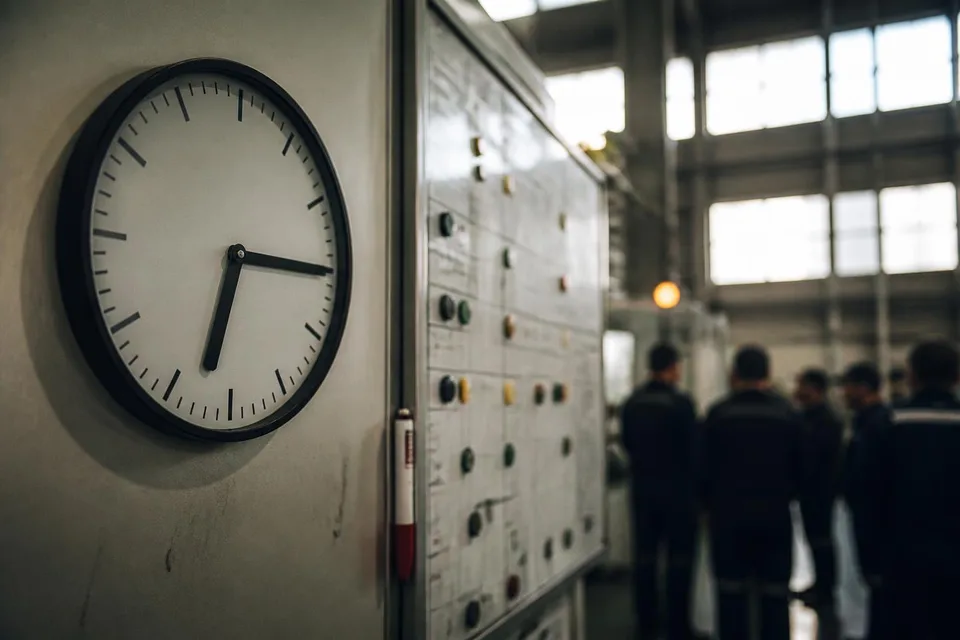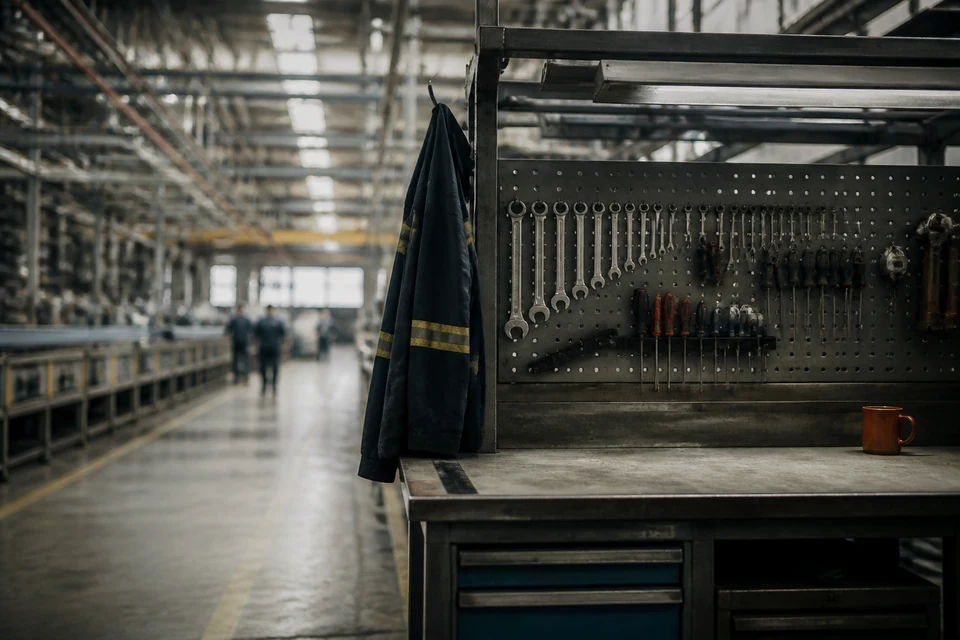

You walk through the hall regularly. Maybe every morning, maybe once a week. You say hello, look at the boards, ask the shift leader whether everything is running. He says yes. You move on. And you almost never walk through the office, because there is nothing to see there.
That is not a gemba walk. That is a walk-through. The difference is not the route, but the attitude: on a walk-through you show presence. On a gemba walk you go to the place where value is created, to understand what hinders the work there, and to translate that understanding into decisions.
Gemba is Japanese for the place where things happen. In the Toyota Production System, going there is the most important leadership habit of all: not learning from reports, but from what you see yourself. In this article I show what an executive gemba walk looks like that changes something, and which questions make the difference.
Why the executive walk-through so often achieves nothing
When the executive team walks through the hall, something strange happens: everyone knows beforehand. The aisles are clear, the boards updated, the answers prepared. You see a plant that does not exist on normal days.
On top of that comes a second effect. As soon as you as the boss ask a question, people hear an expectation. If you ask why the material is lying here, it will be cleared away by tomorrow. Not because the problem was solved, but because you saw it. You generate activity, not improvement.
And third: most walk-throughs have no afterwards. What you saw stays in your head. No note, no feedback, no follow-up question the next week. The organisation learns: the boss walks through, and then nothing happens. Next time the attention is accordingly.
The attitude: understand, do not inspect
The executive gemba walk has a single purpose: to understand what prevents people from doing good work. Not to inspect whether they are doing good work. That difference decides everything that follows.
Whoever inspects gets justifications. Whoever wants to understand gets information. That is why three rules apply for me on a gemba walk: I do not solve problems on the spot. I give no instructions. I do not judge people. What I do is ask, listen, take notes, and later clarify with those responsible what I have seen.
That is hard for managers, especially those with an engineering background. They see a problem and know the solution. But every solution you voice on the spot takes responsibility away from the team and authority away from the shift leader. The better way: "What have you already tried? What do you need to solve this yourselves?"
Questions that change something
The quality of a gemba walk lies in the questions. Not in their number, but in their direction. These have proved themselves in the walks I have accompanied:
- "What is the target for today, and where do you stand?" Shows whether the team knows its KPIs and whether they can be influenced at all.
- "What held you up most yesterday?" The most important question of all. It delivers the real obstacles, not the ones from the report.
- "How often does that happen?" Separates the isolated case from the pattern.
- "Who knows about it?" Shows whether deviations flow upwards or get stuck below.
- "What have you already tried?" Gives the team back the role of problem solver.
- "What would you need from me?" The only question after which you have to do something.
- "Where is that in the standard?" Shows whether standards exist, are known and are lived.
What I avoid: questions that can be answered with yes. "Is everything running?" is not a question, but an invitation to reassure. And questions about blame. "Who did that?" ends every honest conversation for months.
The office is gemba too
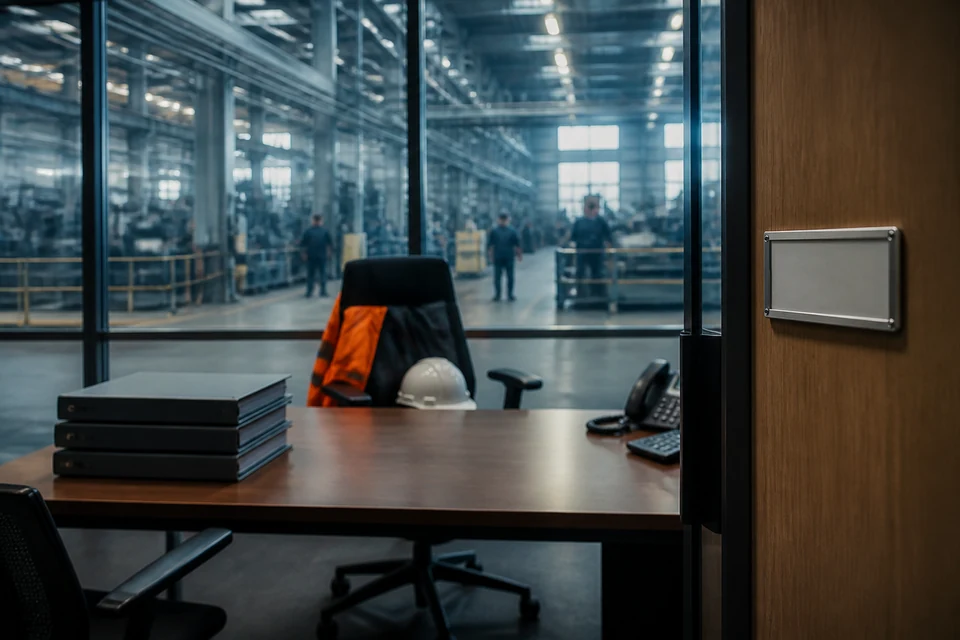
Most executive teams only walk through the hall. They skip the office, because nothing becomes visible there: no machines, no inventories, no boards. Yet in manufacturing companies a large share of lead time sits in the office: in order clarification, production planning, purchasing, invoicing.
In the office the gemba walk is different, but not harder. You sit down next to a clerk and have an order shown to you, from receipt to handover. You ask where it sits when it is not being worked on. You ask how often queries have to be made, and to whom. You ask what is maintained in Excel because the system cannot do it.
A plant with several assembly lines had improved manufacturing over years. On the first gemba walk in the office it turned out that before the first manufacturing step an order passed through several in-trays and a hand-maintained list that only one person understood. The executive team was surprised, the clerical staff were not. Nobody had simply ever asked them.
The afterwards: what makes the walk effective
A gemba walk without follow-up is a stroll. Three things are indispensable.
Note what you have seen. Briefly, in your own words, with place and date. Not as a list of defects, but as an observation. "Material in front of line three is on the aisle, shift leader says a rack has been missing since the conversion."
Report back what comes of it. If you asked what the team needs from you, you owe an answer. Within a few days, in person or via the line manager. Even if the answer is no. Nothing destroys trust faster than a question from the executive team that is never followed by anything.
Recognise patterns, do not solve isolated cases. The value of regular walks lies in the fact that after a few weeks you see what repeats: the same material shortages, the same queries in the office, the same unclear responsibilities. Those are the topics for the leadership circle and the roadmap. The isolated case belongs in the shopfloor meeting, the pattern belongs to you.
From appointment to habit
The most common reason gemba walks fall asleep: they sit in the calendar as an appointment and get postponed as soon as something urgent comes up. And something urgent always comes up.
What helps is a fixed, short routine that is not negotiable. A fixed time slot, every week, in rotating areas, hall and office alternating. Not long, but reliable. Whoever knows that the executive team is somewhere in the plant every Thursday morning stops preparing for it. Then you see the real plant.
Do not go alone. Take the department head with you, let him ask the questions, and observe how he asks. The gemba walk is also a place where you see your managers leading. And now and then take someone from the office into the hall and vice versa. Nothing builds understanding between the two worlds faster than looking at the other side's work.
And finally: the effect comes late. The first walks yield little, because people wait to see whether it is meant seriously. The effect comes when the organisation has learned that you come back, that you ask instead of ordering, and that something follows from what you see.
In short
- A walk-through shows presence. A gemba walk wants to understand what hinders the work. The attitude makes the difference.
- On the spot no solutions, no instructions, no questions of blame. Ask, listen, take notes.
- The most important question: "What held you up most yesterday?" The most binding: "What do you need from me?"
- The office is gemba too. Sit down next to an order, not only next to a machine.
- Without feedback and pattern recognition the walk is a stroll. Fixed routine beats calendar appointment.
Frequently asked questions
Frequently asked questions
How often should the executive team do a gemba walk?
More regularly than feels comfortable, and shorter than you think. A fixed time slot every week, alternating through hall and office, is a good frame. More important than frequency is reliability: one walk that is never postponed has more effect than three that take place depending on daily business. For plant managers and department heads, going to the place where things happen should be daily anyway.
What do I do if I see a safety problem on the gemba walk?
Safety is the only exception to the rule of not giving orders on the spot. In case of acute danger you intervene immediately and have the condition corrected. After that, however, the attitude of understanding applies again: how could this arise, why did nobody report it, what is missing in the standard? A safety problem is almost always also a sign that deviations do not flow upwards. That is the real finding.
What if employees do not talk openly during the walk?
That is normal at the beginning and usually the result of earlier experiences: questions from the executive team had consequences or led to nothing. Both can only be healed through repetition. Come back reliably, ask about obstacles instead of mistakes, and visibly report back what came of the answers. Take the direct line manager with you, so that nobody feels they are talking behind his back. After a few weeks the tone changes.