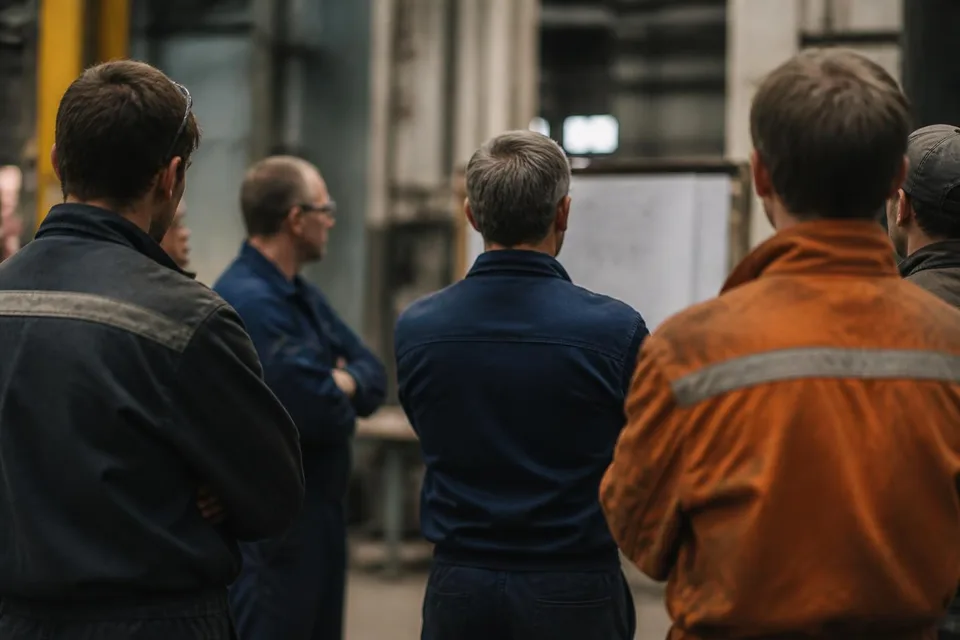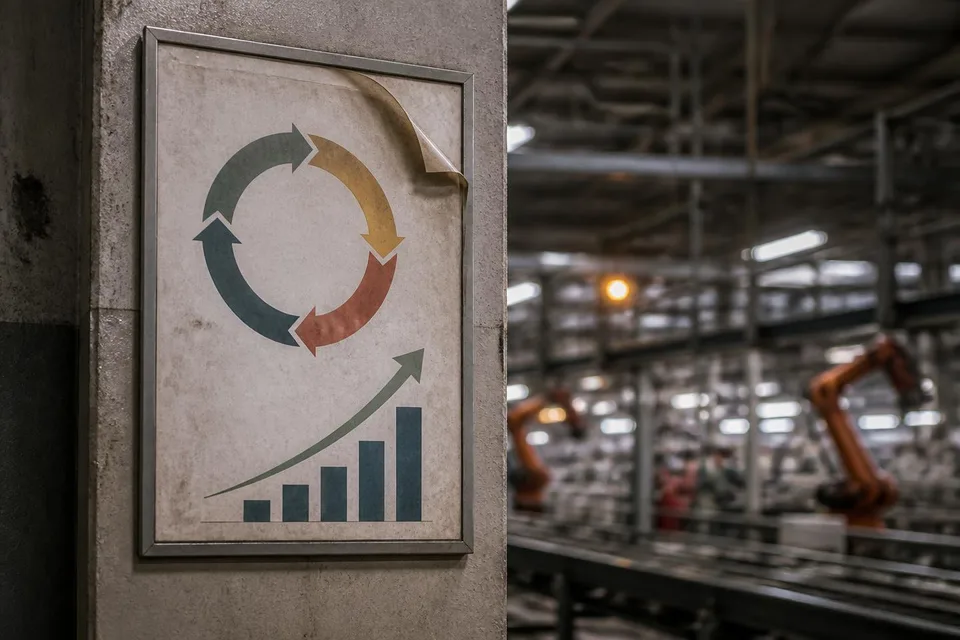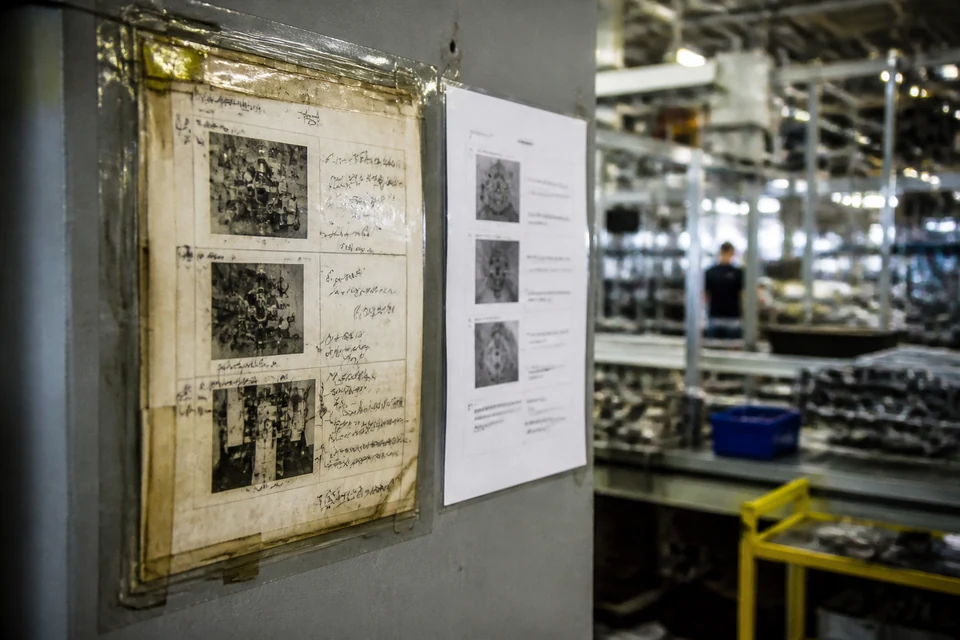

You may know the picture from your own plant. A year ago, an area was reorganised with great effort: value stream analysed, layout changed, standards written, shopfloor board installed. The KPIs improved. Then the project ended, the consultant left, the lean manager moved to another area. Today the board is still up, but the cards are from last quarter. The standards sit in the folder. People are working the way they did before.
The usual explanation is: there was a lack of discipline. I think that explanation is wrong, or at least incomplete. What was missing was not discipline but change. The project changed processes, but not the people who work in them. And people return to what they know as soon as the pressure eases.
That is why, for me, lean without change is unthinkable. The methods are one half. The other half is the question of how people understand, want, are able to and keep up a new way of working. This article is about that second half.
Why lean projects succeed technically and still fail
Lean methods are well documented and logically consistent. Anyone who carries out a value stream analysis properly finds the bottlenecks. Anyone who develops a standard with the team has a usable standard. The problem starts afterwards.
A new process requires everyone involved to give up old habits. The shift leader who used to walk through the hall in the morning and steer by shouting is now supposed to stand at the board and discuss deviations. The clerk who has maintained her Excel list for years is supposed to work in the system, which she knows less well. The supervisor who was always the firefighter is now supposed to solve problems at the root instead of putting out fires.
Each of these changes is a loss before it becomes a gain. A loss of routine, of control, sometimes of status. Anyone who does not take that seriously gets agreement in the workshop and relapse in everyday work. Not out of ill will, but because the old way is easier as long as the new one has not settled in.
What change management really contributes
Change management is often misunderstood as soft background music: a few information events, a newsletter, a kick-off with pastries. That is not what is meant. Change management is the systematic work of ensuring that people support a change and keep it up.
The ADKAR model describes this as a sequence of five stages: Awareness, meaning understanding why something has to change. Desire, the personal wish to take part. Knowledge, knowing how it is done. Ability, being able to do it in everyday work. Reinforcement, so that it sticks. Most lean projects invest almost everything in Knowledge and Ability, in other words in training and implementation. Awareness and Desire are taken for granted, Reinforcement is forgotten.
Kotter's steps say essentially the same thing from the leadership perspective: create urgency, form a coalition, develop and communicate a vision, remove obstacles, make quick wins visible, do not let up, anchor the new in the culture. Both models are old. They are still skipped in most plants because the method promises faster results.
The moment lean tips over: an example
A plant with several production areas that I supported introduced shopfloor management. The boards were well made, the KPIs sensible, the shift leaders trained. After a few months it was running excellently in one area and not at all in another. Same method, same training, same boards.
The difference lay with the department heads. One came to the board himself every morning, asked questions, took obstacles away with him and reported back on what he had dealt with. The other let the shift leaders get on with it and looked at the KPIs in his office. Within a few weeks his shift leaders had understood that the board was not important to anyone, and treated it accordingly.
That is the moment lean tips over: not at the introduction, but in the weeks afterwards, when it is decided whether leadership carries the new way or merely tolerates it. Reinforcement is not a measure, it is the daily behaviour of line managers. No consultant and no lean manager can take that on by proxy.
Four things leadership has to do concretely
From experiences like these, I have derived four tasks that leadership has to take on itself in every lean initiative.
- Explain the why, repeatedly and in person. Not by circular email, but in conversation with the teams, with an honest answer to the question of what changes for the people.
- Turn those affected into participants. Standards, boards and procedures are built with the people who work with them. What people have helped shape, they defend.
- Stay visibly involved. Show up at the board, go on gemba walks, ask questions, clear obstacles. Not to control, but to show interest.
- Read relapse as a signal, not as disobedience. When a standard is bypassed, the problem usually lies with the standard or the conditions, not with the person.
All of this costs leadership time, which is scarce anyway. But it is the only time that makes the difference between a project that holds and one that fizzles out.
Resistance is information
In almost every lean initiative there is resistance. Scepticism from the experienced, silence in the workshop, bypassing of the new process. The most common reaction from leadership is to break it or ignore it. Neither works very often.
I read resistance as information. Anyone who resists usually has a reason: he sees a problem the planners have not seen. He has already been through three programmes that all fizzled out. He is afraid that the standard will devalue his experience. All of these reasons are legitimate, and all of them can only be resolved in conversation.
That requires leaders to tolerate contradiction and to listen before they persuade. I myself led laterally for years, without disciplinary authority. I could not force anyone, so I had to understand why someone was not coming along. That was laborious, and it made the results last. Anyone who has formal authority finds it easier to use it and harder to get genuine commitment.
Plan lean and change together, not one after the other
The practical conclusion: do not plan change as an appendix, but from the start. When you set up a value stream analysis, plan at the same time who will discuss the results with the teams and how. When you introduce a board, define who shows up there how often and how obstacles are fed back. When you write a standard, plan how it will be supported in the first weeks.
That lengthens the project on paper and shortens it in reality, because the relapse does not happen. It requires the lean side to take people seriously and the change side to get concrete. Both belong in one pair of hands, or at least at one table.
In my projects, therefore, both strands run in parallel: the method on the process and the work with the leaders and teams who are supposed to carry the process. The human factor is not a footnote to process optimisation. It is the reason why it holds or does not.
In short
- Lean projects usually succeed technically and fail afterwards, because people return to old habits as soon as the pressure eases.
- ADKAR and Kotter describe the same gap: understanding, wanting and reinforcing are skipped in lean initiatives.
- Whether lean holds is decided in the weeks after the introduction by the behaviour of the direct line managers.
- Resistance is information. Anyone who resists usually has a reason that only a conversation can clarify.
- Change belongs in the lean plan from the start, not as an appendix. Otherwise the relapse lengthens the project in reality.
Frequently asked questions
Frequently asked questions
What is the difference between lean management and change management?
Lean management targets processes: finding waste, creating flow, establishing standards and KPIs. Change management targets people: understanding why something has to change, wanting to take part, being able to do the new thing and keeping it up. In practice the two interlock. A new process without a change in the people falls back, a change without a concrete process remains abstract. That is why I plan both together from the start.
How do I recognise early that a lean project is about to tip over?
By small signs in the weeks after the introduction. The board is no longer updated daily. The leader shows up at the meeting less often. The standard is on the wall, but people work around it. Obstacles that were escalated get no feedback. Each of these signs is harmless on its own and together they are a clear signal. Anyone who does not react then has the previous state back after a quarter.
What can I do as plant management if a department head only tolerates lean but does not carry it?
First seek the conversation, not the instruction. Behind it there is often overload, uncertainty in the new role or the experience of earlier programmes that fizzled out. Clarify what the department head needs in order to come along: time, coaching, a role model. At the same time make clear that visible presence at the board is part of his leadership role. If neither changes anything, it is a leadership question that you cannot solve through the method.