01
Your best specialist was promoted and now stands in front of their former team without any leadership tools.
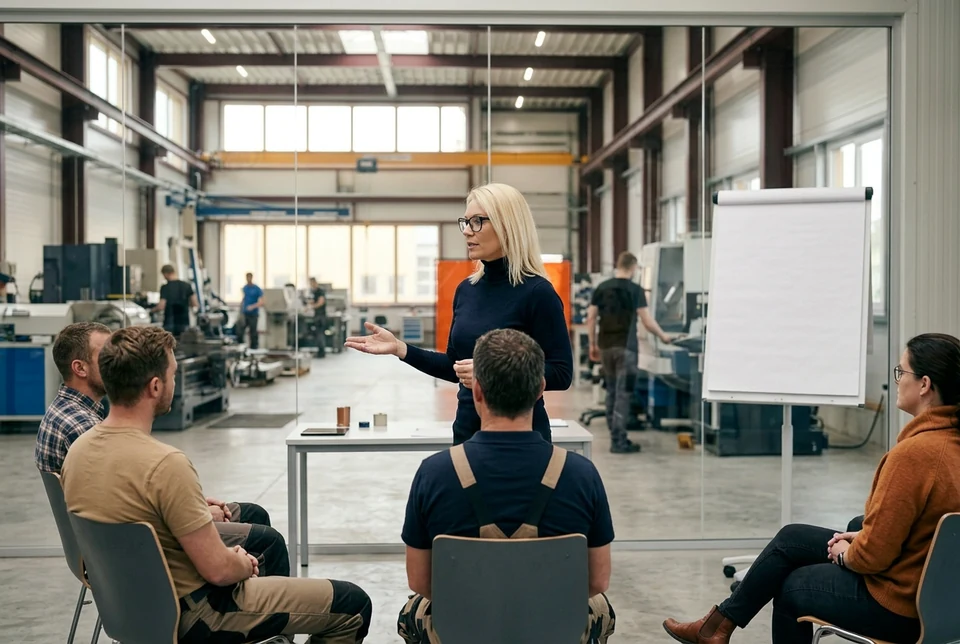
leadership training
My training never starts with a leadership model on the wall. It starts with the cases your leaders bring along: the shift leader whose team ignores the new 5S standard, the team leader caught between production and planning, the department head whose people see the reorganisation as a threat. We work on those cases. I provide structure and tools, the group develops solutions, and every participant leaves with a concrete plan for the coming weeks.
I tailor the content to the audience and its maturity. A module for new team leaders looks different from one for a management team introducing hoshin kanri. The most frequent building blocks: the step from employee to leader, leading people in shift operations, lean leadership with gemba walks and regular communication, leading through change, lateral leadership without formal authority, resolving conflicts between shifts and departments, and enabling self-organisation in teams.
The training is most effective when it is embedded in a real initiative: introducing shop floor management, a new production system, a reorganisation or the move to group work. Then your leaders are not practising in the abstract, but leading the very change that is happening right now.
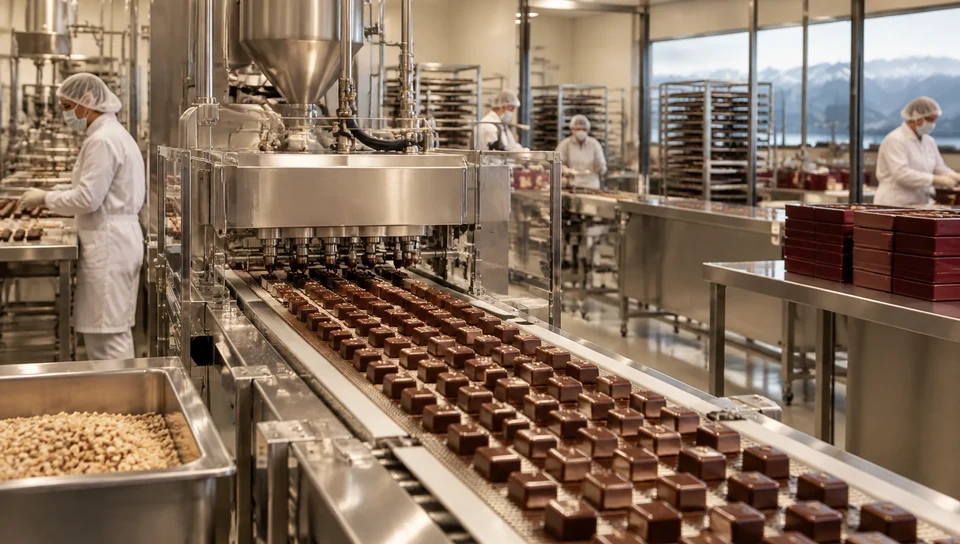
Leadership problems rarely show up as leadership problems.
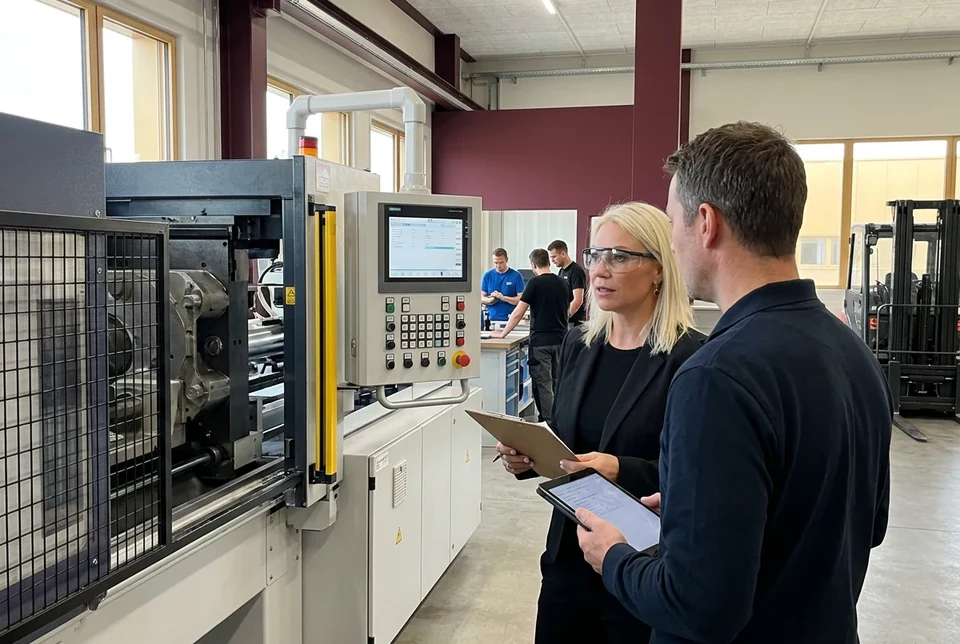
Leadership only changes through practice.
A conversation with senior management: what should change in leadership behaviour, and how would you notice it on the shop floor?
Which level, which situations, which initiative is currently running? I speak to individual participants beforehand.
One or two days in-house, working on the cases participants bring. Everyone leaves with a concrete plan.
Four to six weeks of application. If needed, I am available for short questions by phone or video.
Two to four modules in total; each one starts by reviewing what worked and what did not.
After a few months we check with senior management whether the agreed changes in behaviour have arrived in daily work.
Leaders who speak the same language and hold each other accountable:
A training concept tailored to your leadership levels and your current initiative.
Two to four in-house modules built on real situations from your plant.
Tools for regular communication, feedback, delegation, conflict resolution and lateral leadership.
One concrete implementation plan per person and module, reviewed in the following module.
Availability between modules for short questions.
A review with senior management against the agreed behavioural goals.
Intro call
You describe your starting point, I tell you openly whether and how I can help.
Frequently asked questions
Open seminars bring together participants from different companies and work with generic cases. My training runs in-house with the leaders of your company and on situations from your plant. The group develops a shared language and can hold each other accountable afterwards. For individuals looking for a network outside their company, an open seminar may still be the better choice.
All levels, but not all in one group at the same time. I train shift leaders and team leaders, foremen and group leaders, department and division heads, and management teams. The topics overlap, the cases do not. A shift leader needs tools for the daily shop floor conversation, a division head needs tools for steering through key figures. It works best when several levels are trained one after the other and the upper level knows what the lower level has covered.
A single module takes one day, sometimes two. Because leadership only changes through practice, I usually plan series of two to four modules four to six weeks apart. Such a series runs over three to six months. I offer compact one-day formats for clearly defined topics, such as lateral leadership in projects.
Lateral leadership means leading people without being their line manager. It affects project leaders, lean coordinators, process owners and everyone who works across departmental boundaries. They cannot give orders; they have to convince, balance interests and create commitment without sanctions. I worked this way for many years myself and pass on the tools that really hold up in the training.
Yes, it is one of my most frequent formats. The best specialists get promoted and suddenly lead their former team, often without preparation. In the training we work on the change of role: the first conversation, dealing with former colleagues, delegating instead of doing everything yourself, giving feedback in shift operations. The ideal time is the first months after the appointment, ideally combined with individual coaching.
Through behaviour and key figures, not satisfaction forms. Before the training we agree with senior management what should change: for example that shop floor rounds take place daily, that deviations are escalated promptly or that employee conversations are held. We check these points in a short review after a few months.
I charge by effort or as a package for a series of modules, including preparation, delivery, materials and follow-up. I quote specific amounts in the free initial consultation, because a single day for eight team leaders and a multi-month series for three leadership levels are not comparable. Travel costs are shown separately and transparently.
45 minutes, no obligation. Tell me which leadership level is currently the bottleneck.