It usually happens on a Friday. The lean manager, the lean coordinator, the one supervisor who keeps the boards alive, asks for a word. New job, closer to home, more responsibility. Three months' notice. And in plant management a realisation sets in that nobody wanted to say out loud before: the whole programme depends on this person.
I have experienced this several times, in corporate plants and in mid-sized companies alike. The shopfloor meetings, the standards, the value stream maps, the contact with the shift leaders, the knowledge of why a standard is the way it is and not otherwise. All in one head. And that head is leaving.
That is not a staffing problem, it is a structural problem. And it begins long before the resignation. In this article I describe how plants end up in this dependency, how you move knowledge from heads into structures, and what can still be saved in the last weeks before a departure.
How plants end up in the dependency
The dependency does not arise from carelessness but from success. At the start of a lean programme, someone is needed who pulls. A person who knows the methods, builds the boards, facilitates the meetings, withstands the resistance. This person becomes the face of the programme. Plant management is glad that it is running and lets them get on with it.
That is exactly where the problem begins. The better the lean manager, the less the others have to understand. The supervisors do not facilitate themselves, because he can do it better. The standards are not maintained by the teams, because she does it anyway. The knowledge accumulates in one place, and the plant gets used to lean being a person, not a way of working.
The same happens in the office. The one clerk who has the entire order process in her head, who knows which customer needs which special rule and who is responsible in engineering when the responsible person is absent. As long as she is there, it runs. And because it runs, nobody documents.
Which knowledge is actually lost
When I talk to plant managers about this case, most think first of documents. Value stream maps, standards, training materials. That is the smallest part, and usually it even exists. What is lost is something else:
- The why behind the standards: why material supply is organised this way, what problems there were before, which variants were rejected.
- The relationships: who in the plant is pulling along, who is holding back, whom you have to approach and how so that something moves.
- The routines: how the shopfloor meeting runs when it gets stuck. How to bring back a supervisor who has let the board gather dust.
- The eye: the ability to see waste in a hall where others see normal operation.
None of that is in a folder. It is in conversations, in walks through the plant, in the way someone asks questions. And that is exactly why it cannot be handed over in the last three months. It can only be spread over time.
Spread knowledge before it gets scarce
The most effective protection against the loss of key people is to spread their knowledge continuously while they are still there. That sounds simple and is almost never done, because in the short term it is slower. When the lean manager facilitates the meeting, it runs better than when the supervisor practises it for the third time. But only the second variant builds knowledge in the plant.
In practice that means: the lean manager does not facilitate, he enables. He stands at the back when the supervisor facilitates and gives feedback afterwards. He does not build the board, he builds it with the team that will maintain it later. He does not walk the gemba alone, he takes plant management along and lets them ask the questions. His task shifts from doing to enabling.
An example: in a plant with several production areas, the lean coordinator had facilitated all the kaizen workshops herself for years. When she announced a sabbatical, she began to build up a supervisor in each area as co-facilitator. After some time the workshops ran without her. When she actually left, the plant hardly noticed the difference. Not because she had been unimportant, but because she had stopped being irreplaceable in time.
Structures that carry knowledge
Alongside the people, structures are needed in which knowledge sits without being tied to a person. By that I do not mean a document management system, but habits of the plant:
- Every standard has an owner in the team, not in the lean department. Whoever maintains the standard knows it.
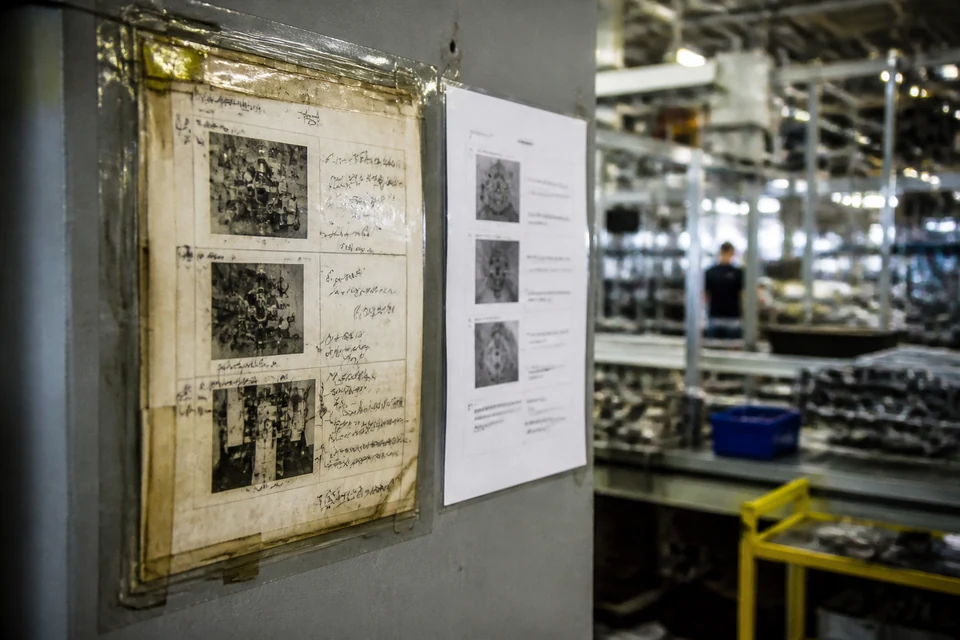
- Every change to a standard is briefly justified and noted on the standard itself. The why remains visible.
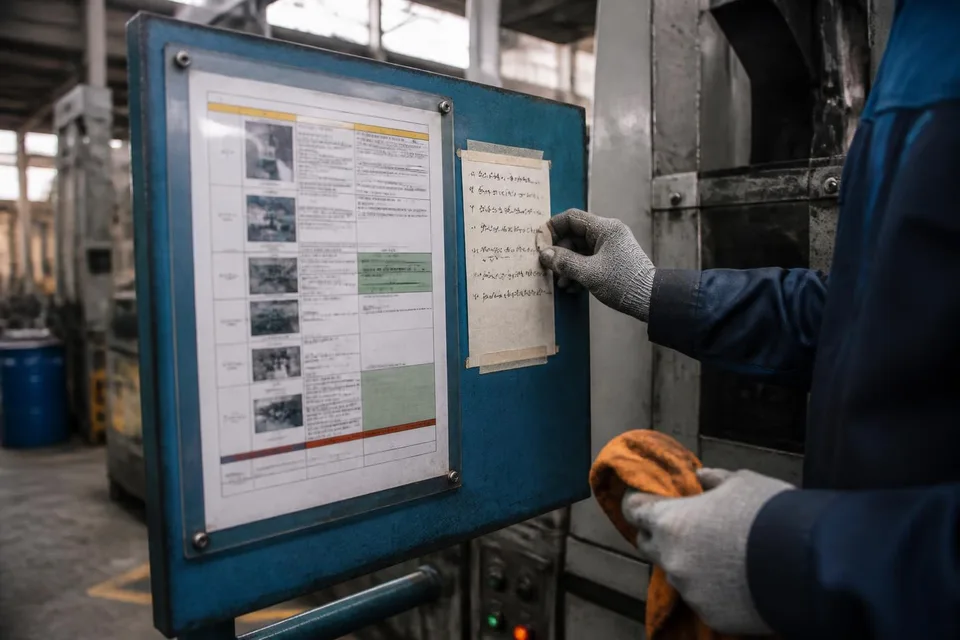
- The shopfloor meeting has a fixed sequence that is written on the board, and is facilitated by rotating people.
- Plant management's gemba walk is a fixed appointment with fixed questions, regardless of who accompanies it.
- Problem solutions are recorded on an A3, with cause, action and result. That is the plant's memory.
The same applies to the office. The clerk with the whole process in her head does not need a successor who learns everything from scratch. She needs a process map that the team maintains together, special rules that are stored against the customer instead of in her memory, and a deputy who actually performs the process regularly, not just knows it in theory.
The last weeks: what can still be saved
If the resignation is already on the table, time is short but not lost. What I recommend in this phase is not to document everything. That leads to folders that nobody reads. Instead, hand over specifically what nobody else knows.
First: the person walks through the plant with their successor or with the leadership team and tells the story behind every standard, every board. Why is it like this, what was there before, what was rejected. These walks are worth more than any manual.
Second: she names the relationships. Who in the plant carries the programme, who needs attention, which interface is sensitive. That is delicate and has to remain confidential, but without this knowledge the successor gropes in the dark for months.
Third: in the last weeks she no longer facilitates anything herself. She sits at the back. Everything that runs without her during this time will run afterwards too. Everything that still depends on her becomes visible, and for that there is still time.
The real leadership question
Behind the topic lies a question for plant management that is uncomfortable: did we delegate lean to one person because it was convenient? If so, the next key person will become just as irreplaceable as the last, and the problem repeats itself.
Lean that holds belongs to the line. Plant management asks about deviations on the gemba walk, the supervisors facilitate their meetings, the teams maintain their standards. The lean manager is then coach, method expert, sparring partner, but not the carrier. Anyone who sets up the role this way makes the plant independent of individual people, and in the end that is the best protection against the Friday conversation.
In short
- Dependency on key people arises from success: the better the lean manager, the less the others learn.
- What is lost is the why behind standards, the relationships and the eye, not the documents.
- Knowledge cannot be handed over in three months, only spread over time: the lean manager enables instead of doing.
- Standards with owners in the team, rotating facilitation and an A3 memory carry knowledge independently of people.
- Lean that holds belongs to the line; the lean role is coach, not carrier.
Frequently asked questions
Frequently asked questions
Should we refill the lean manager position immediately?
Not reflexively. Use the departure to redefine the role. If the previous person mainly did things, the next one needs a different profile: enabling, coaching, conveying methods. Sometimes it also turns out that a supervisor or team leader from within the company can take on the task if they get support. A short transition period with external support can help to clarify that without the programme falling asleep.
How do I recognise whether our lean programme depends on one person?
Imagine the person is absent for two weeks without notice. Do the shopfloor meetings continue? Are deviations still followed up? Do the supervisors know why their standards are the way they are? If you hesitate on any of these questions, it depends. Another simple test is who in the plant gets named when the word lean comes up. If it is always the same name, you have your answer.
What about key people in the office who do not carry a lean title?
The same applies to them, and they are overlooked more often. The clerk who has the order process in her head alone is just as much a risk as the lean manager. Make her knowledge visible: process map with the team, special rules stored against the transaction instead of in memory, and a deputy who performs the process regularly themselves. Anyone who only watches cannot take over.