01
The foreman solves every problem himself. He is the best man on the line and therefore constantly on the line, instead of leading.
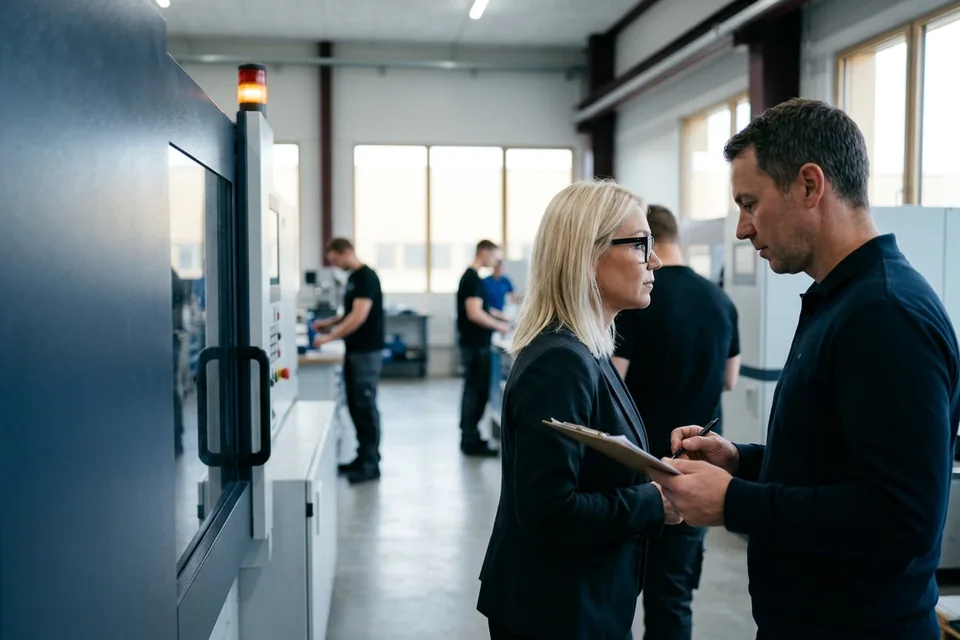
lean leadership
Lean does not fail because of methods. It fails because of leadership that hangs up boards and then stops looking, that punishes problems instead of seeking them out, that gives orders instead of asking. Lean Leadership is the leadership attitude that carries Lean in everyday work. I train and support foremen, shift leaders, team leaders and production management in it, drawing on 13 years of experience on the shop floor.
The managers on the shop floor are the most important and the least developed.
Lean Leadership is the leadership practice that belongs to a Lean system. It differs from classic leadership in four respects. First: the manager is present where value is created, regularly and in a structured way, for example in the Gemba Walk, not only when there are disruptions. Second: they ask instead of giving orders. What is the standard, what deviates, what is stopping you? Third: they treat problems as treasure, not as blame. A visible problem is the chance to improve; a hidden one becomes expensive. Fourth: they develop people instead of solving things for them. Their success is measured by how much their team can do without them.
This attitude is often described as servant leadership: the manager serves the team and the process by removing obstacles and building capabilities. Related to it is transformational leadership, which works through purpose, role modelling and individual development rather than instruction and control. Both are usable on the shop floor if they are combined with clear standards. Lean Leadership is not soft; it demands the standard every day. But it does so by asking and enabling, not by controlling.
The leadership principles I develop with managers are therefore concrete: I stand at the board every day. I ask about the cause before I prescribe a solution. I say thank you for every problem that is reported. I hand over responsibility step by step and follow it through.
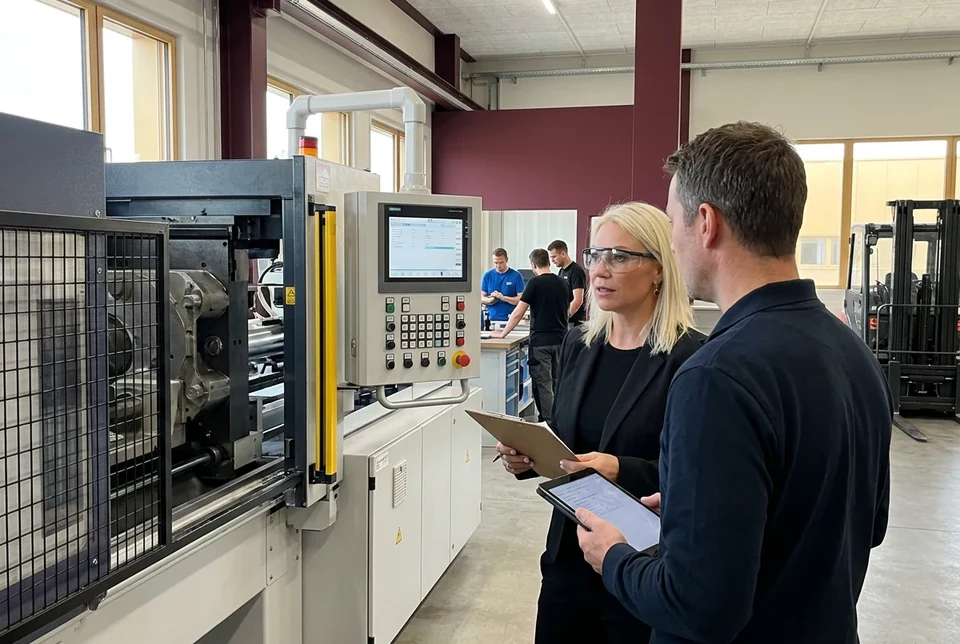
Lean Leadership is not learned in a seminar room but on the shop floor.
Observation of shop floor meetings and Gemba Walks, conversations with managers and employees. How is leadership practised today, what works, what is missing?
Workshop with production management and the foremen: What kind of leadership does our plant need? Five to seven concrete principles that can be checked against behaviour.
Two to four training days, spread over six to twelve weeks. Each module ends with a practical assignment for the participant's own area.
Between the modules I'm on the shop floor: I observe the meeting, join the Gemba Walk, and afterwards discuss what I have seen. This is the part that makes the difference.
Standardised work for managers: What does the foreman do daily, weekly, monthly? Linked to shop floor management and regular communication routines.
After three months, a second baseline assessment. What has changed, where is rework needed?
Managers who carry Lean instead of administering it:
Baseline assessment of leadership on the shop floor with concrete observations.
Leadership principles for your plant, developed with the managers, checkable against behaviour.
Trained foremen, shift leaders and team leaders who facilitate stand-up meetings, solve problems in a structured way and develop employees.
Standardised leadership routines per level, linked to boards and regular communication routines.
Support on the shop floor with feedback on real situations.
Measurable effect: more problems reported, more measures implemented, foremen who lead again instead of firefighting.
Intro call
You describe your starting point, I tell you openly whether and how I can help.

Frequently asked questions
They are present, they ask and they develop. Present means: at the board every day, regularly on the Gemba Walk, approachable when there are disruptions, but not the fire brigade for everything. Asking means: they want to understand the cause before prescribing a solution, and they ask in a way that leads employees to report problems instead of hiding them. Developing means: they hand over responsibility step by step, trust their people to solve problems and measure their success by how much the team can do without them. Added to that is fairness: standards apply to everyone, commitments are kept, and criticism is given in private, recognition in front of the team.
Not with bonuses; they work for two weeks. People in production are motivated when three things are right: they know why their work matters; they have influence over how they work; and they are seen. Concretely, that means: explain the key figures on the board, do not just hang them up; decide on improvement suggestions quickly and implement them visibly; solve problems together instead of prescribing solutions; and talk to people every day, not only when something goes wrong. The strongest motivation arises when a team has solved a problem itself and sees the result on the board the next day.
Lean Leadership is the leadership attitude and practice that carries a Lean system in everyday work. It rests on presence where value is created, on asking instead of giving orders, on dealing openly with problems, and on developing employees into independent problem solvers. Managers work with standards, key figures and regular communication routines and demand the standard every day, but through questions and enabling, not through control. Lean Leadership is the reason why Lean is still alive in some plants after ten years and has disappeared in others after one; the methods are the same, the leadership is not.
Leadership principles are a few concrete statements about how leadership is practised in a company, worded so that they can be checked against behaviour. Not: we lead with appreciation. But: I discuss criticism in private and recognition in front of the team. Good leadership principles are created with the managers, not for them, and fit the plant, not the mission-statement poster. They are taught in trainings, anchored in leadership routines and discussed regularly in feedback conversations between production management and foremen. Five to seven principles are enough; nobody remembers more.
Lateral leadership means leading people you cannot give orders to: project teams, other departments, suppliers, colleagues at the same level. It works through persuasion, trust, negotiation and shared goals rather than line authority. For Lean experts, project managers, process owners and staff functions it is the normal case, but foremen also lead laterally when they work with maintenance, logistics or quality. I led laterally for more than a decade and I know: it is more demanding than hierarchical leadership, but the results last longer, because people carry them instead of enduring them.
Management organises: planning, allocating resources, steering processes, monitoring key figures, correcting deviations. Leadership moves: giving direction, conveying purpose, winning over and developing people, enabling change. A foreman needs both. He has to plan the shift, uphold the standard and know the key figures, and he has to lead his people so that they report problems, think along and take responsibility. Many managers on the shop floor are good managers and weak leaders, because they learned the one and not the other. Lean Leadership works on exactly this gap.
Because they lead the way they were led, and that is rarely a role model. A foreman who is promoted without training falls back under pressure on what he knows: doing it himself, giving orders, controlling. That works in the short term and in the long term exhausts him and his team. Added to that is the role change from colleague to superior, which nobody supports. And the expectation that he will facilitate shop floor meetings, solve problems in a structured way and develop employees, without anyone having shown him how. Training with support on the shop floor is not a reward but the precondition for the promotion to work.
Two to four training days, spread over six to twelve weeks, with practical assignments and support on the shop floor in between. The spacing matters: training on two consecutive days is forgotten as soon as everyday work returns. Between the modules, the managers try out what they have learned in their own area, I observe and give feedback, and in the next module the experiences are discussed. After three months, a baseline assessment follows. For plants running shifts, I plan the modules so that all shifts can take part, usually in half days at shift changeovers.

45 minutes, no obligation. Tell me how your foremen lead today and how they should lead.